Georges Marchais

Personal Info

Known For

Acting

Known Credits

0.6449

Gender

Male

Birthday

07-Jun-1920

Age

(106 years old)

Place of Birth

La Hoguette, Calvados, France

Also Known As
  • NO INFO PROVIDED

Georges Marchais

Biography

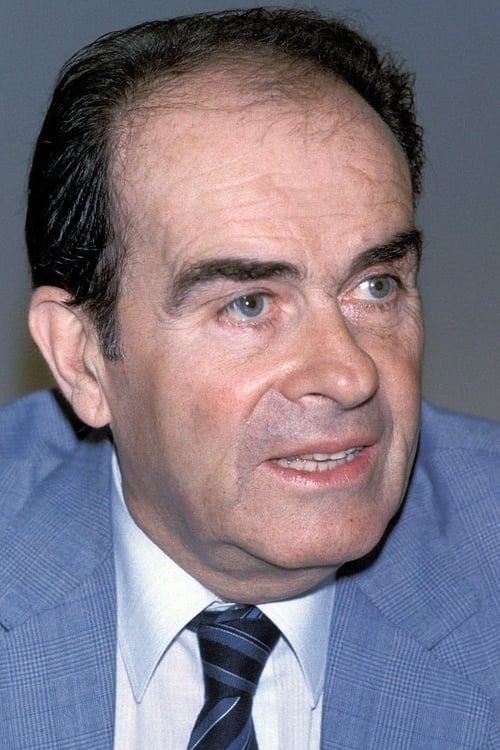
Georges René Louis Marchais (7 June 1920 – 16 November 1997) was the head of the French Communist Party (PCF) from 1972 to 1994, and a candidate in the French presidential elections of 1981. Born into a Roman Catholic family, he became a mechanic, just before the beginning of World War II, with the Société Nationale d'Étude et de Construction de Moteurs d'Aviation. After the fall of France, he went to Nazi Germany to work in the Messerschmitt aircraft manufacturing plant. He returned to France in May 1943 with forged documents. In 1946, he became secretary of the metalworkers' trade union in Issy-les-Moulineaux, and advanced in the Confédération générale du travail in his commune from 1951, becoming secretary of the Seine Metallurgical Workers' Union Federation from 1953 to 1956. He joined the French Communist Party in 1947. In 1956, he was appointed a member of the extended Central Committee and lead the South-Seine PCF local federation, in the bastion of Maurice Thorez, the historical leader of the Party. Three years later, he became a full member of the Central Committee and of the Politburo. His lightning promotion was explained by his professional origins and his devotion to Thorez. Indeed, he was part of the young guard of the General Secretary which participated to the strengthening of Maurice Thorez's leadership, which was covertly disputed by some members of the Politburo (Laurent Casanova and Marcel Servin). In 1961, after the ousting of these, he was nominated secretary for organization. Then, he supported the new General Secretary Waldeck Rochet and in his policy of conciliation with the other left-wing parties. In reaction to the riots of May 1968, in a controversial article published in the party's paper L'Humanité, Marchais showed his contempt for Daniel Cohn-Bendit by calling him a "German anarchist". He accused some students of being "false revolutionaries" coming from the bourgeoisie. From then on, he was one of the personalities intervening in the media in the name of the PCF. When Rochet fell ill, in 1970, he was promoted junior General Secretary. In fact, he was at this moment the real leader of the PCF. In this, he co-signed the Common Programme with the Socialist Party (PS) and the Movement of Left Radicals (MRG) in June 1972. From 1973 to 1997, he was deputy of Val de Marne département, a southern Paris suburb. ... Source: Article "Georges Marchais" from Wikipedia in English, licensed under CC-BY-SA 3.0.

Credits

L'addio a Enrico Berlinguer L'addio a Enrico Berlinguer (1984) Character: Self
A film of Enrico Berlinguer's funeral in Rome, briefly tracing his career as leader of the Italian Communist Party.
Georges Marchais, l’homme qui avait choisi son camp Georges Marchais, l’homme qui avait choisi son camp (2022) Character: Self (archive footage)
Both a political narrative and a psychological reflection, this documentary explores the personal journey of a quarry worker’s son from Calvados who rose to become the last great figure of the French Communist Party. It delves into the logic that shaped his path and his lasting impact on France’s history.
Karl Marx und seine Erben Karl Marx und seine Erben (2018) Character: Self (archive footage)
Over the past hundred years, dramatic social upheavals have taken place in the name of Karl Marx's theories. In Western Europe, the student movement of 1968 and the Eurocommunists were inspired. And in recent times, the thinker has experienced a renaissance.
Reporters Reporters (1981) Character: self
The co-founder of the Gamma press agency, Raymond Depardon, created this documentary of press photographers in Paris and their subjects by following the photographers around for one month, in October, 1980. In-between long hours waiting for a celebrity to emerge from a restaurant or a hotel, boredom immediately switches to fast action as the cameras click and roll when the person appears. The reaction to the gaggle of photographers is as varied as the people they often literally chase all around town. While some of the celebrities, such as Jacques Chirac who was mayor of Paris at the time, are perceived as comical caricatures, others are shown simply going about ordinary pursuits - including Catherine Deneuve, Gene Kelly, and Jean-Luc Godard.
La Société du spectacle La Société du spectacle (1974) Character: Self (archive footage)
Guy Debord's analysis of a consumer society.
La TV des 70's : Quand Giscard était président La TV des 70's : Quand Giscard était président (2022) Character: Self (archive footage)
In May 1974, Valéry Giscard d'Estaing became President of the Republic and wanted to bring about a new era of modernity. One of his first decisions was to break up the ORTF with the creation of three new television channels: TF1, Antenne 2 and FR3. Three new public channels but autonomous and competing. It is a race for the audience which is engaged then, and from now on the channels will make the war! This competition will give birth to a real golden age for television programs, with variety shows in the forefront. The stars of the song are going to invade the living rooms of the French for their biggest pleasure. This unedited documentary tells the story of the metamorphosis of this television of the early 1970s, between freedom of tone, scandals, political intrigues and programs that have become mythical.
Coluche, l'histoire d'un mec Coluche, l'histoire d'un mec (2008) Character: Self (archive footage) (uncredited)
French comedian Michel Colucci, better known as Coluche, announces - for laughs - his candidacy for the 1981 French presidential elections.


Our Work is

Designed, crafted, and built with ❤️ for fans of all kinds.


Anime | Movie
2024 Animeperson . All Rights Reserved