Sonny Rollins

Personal Info

Known For

Acting

Known Credits

0.1724

Gender

Male

Birthday

07-Sep-1930

Age

(96 years old)

Place of Birth

New York City, New York, USA

Also Known As
  • Walter Theodore Rollins

Sonny Rollins

Biography

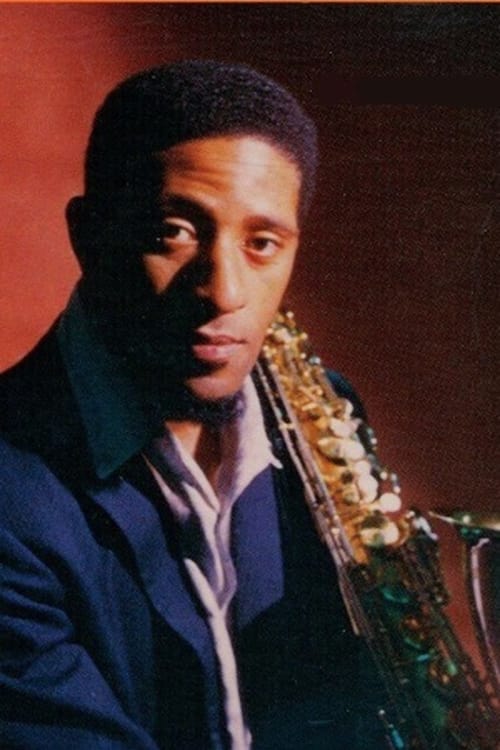
Walter Theodore "Sonny" Rollins (born September 7, 1930) is an American jazz tenor saxophonist who is widely recognized as one of the most important and influential jazz musicians. In a seven-decade career, he has recorded over sixty albums as a leader. A number of his compositions, including "St. Thomas", "Oleo", "Doxy", "Pent-Up House", and "Airegin", have become jazz standards. Rollins has been called "the greatest living improviser" and the "Saxophone Colossus". Rollins was born in New York City to parents from the United States Virgin Islands. The youngest of three siblings, he grew up in central Harlem and on Sugar Hill, receiving his first alto saxophone at the age of seven or eight. He attended Edward W. Stitt Junior High School and graduated from Benjamin Franklin High School in East Harlem. Rollins started as a pianist, changed to alto saxophone, and finally switched to tenor in 1946. During his high school years, he played in a band with other future jazz legends Jackie McLean, Kenny Drew, and Art Taylor. After graduating from high school in 1948, Rollins began performing professionally; he made his first recordings in early 1949 as a sideman with the bebop singer Babs Gonzales (trombonist J. J. Johnson was the arranger of the group). Within the next few months, he began to make a name for himself, recording with Johnson and appearing under the leadership of pianist Bud Powell, alongside trumpeter Fats Navarro and drummer Roy Haynes, on a seminal "hard bop" session. In early 1950, Rollins was arrested for armed robbery and spent ten months in Rikers Island jail before being released on parole; in 1952, he was re-arrested for violating the terms of his parole by using heroin. Between 1951 and 1953, he recorded with Miles Davis, the Modern Jazz Quartet, Charlie Parker, and Thelonious Monk. A breakthrough arrived in 1954 when he recorded his famous compositions "Oleo", "Airegin", and "Doxy" with a quintet led by Davis that also featured pianist Horace Silver, these recordings appearing on the album Bags' Groove. In 1955, Rollins entered the Federal Medical Center, Lexington, at the time the only assistance in the U.S. for drug addicts. While there, he volunteered for then-experimental methadone therapy and was able to break his heroin habit, after which he lived for a time in Chicago, briefly rooming with the trumpeter Booker Little. Rollins initially feared sobriety would impair his musicianship, but then went on to greater success. Rollins briefly joined the Miles Davis Quintet in the summer of 1955. Later that year, he joined the Clifford Brown–Max Roach quintet; studio albums documenting his time in the band are Clifford Brown and Max Roach at Basin Street and Sonny Rollins Plus 4. After the deaths of Brown and the band's pianist, Richie Powell, in a June 1956 automobile accident, Rollins continued playing with Roach and began releasing albums under his own name on Prestige Records, Blue Note, Riverside, and the Los Angeles label Contemporary. ... Source: Article "Sonny Rollins" from Wikipedia in English, licensed under CC-BY-SA 3.0.

Credits

Sonny Rollins '74: Rescued! Sonny Rollins '74: Rescued! (2010) Character: Self
Featuring a specially-shot introduction with Jamie Cullum, Arena presents a lost treasure - Sonny Rollins performing at Ronnie Scott's in 1974. After nearly 40 years unseen, this unique film shows a spellbinding performance from arguably the greatest saxophone player in the world. Having played alongside Miles Davis, Charlie Parker and Thelonious Monk, Rollins is one of the few surviving jazz greats. This gig captures him after his 1972 comeback when his bands started to sound funkier and to use electric guitar and bass. The band for this1974 set features Japanese guitarist Yoshiaki Masuo and soprano saxophone player Rufus Harley, who doubles on the bagpipes
The Jazz Baroness The Jazz Baroness (2009) Character: Self
The true story of a British heiress's love for jazz genius Thelonious Monk.
John Coltrane   Four Tenors John Coltrane Four Tenors (2002) Character: Himself
Four giants of the tenor saxophone -- including the legendary John Coltrane -- are featured in this collection of rare performances recorded in the '60s. Filmed for the television series Jazz Casual, which was hosted by the great jazz writer Ralph Gleason, John Coltrane: Four Tenors features Coltrane and his group (featuring Elvin Jones and McCoy Tyner) from 1963, Ben Webster (with Jimmy Witherspoon and Vince Guaraldi) from 1962, Charles Lloyd (accompanied by Keith Jarrett and Jack de Johnette) in 1968, and Sonny Rollins (joined by Jim Hall and Ben Riley) in 1962.
Sonny Rollins: Beyond the Notes Sonny Rollins: Beyond the Notes (2012) Character: Self
Sonny Rollins: Beyond the Notes uses his 80th birthday concert to look into the man and his music.
Max Roach: The Drum Also Waltzes Max Roach: The Drum Also Waltzes (2023) Character: Self
The Drum Waltzes explores the life and music of legendary drummer, activist Max Roach, his creative peaks, personal struggles and re-inventions from the Jim Crow to Civil Rights eras, from heady days of post-war jazz to hip hop and beyond.
Brownie Speaks Brownie Speaks (2014) Character: Self
A native of Wilmington, Delaware, jazz trumpeter Clifford Brown made an outstanding and influential contribution to music. In an era when many musicians were emulating Charlie Parker’s drug abuse, Brown inspired others to achieve greatness while living a clean life. Ironically, he was killed in a car accident at the age of 25. This feature-length documentary presents a richly detailed account of Brown’s life, and examines his historical importance in the context of three criteria–innovation, influence, and individuality.
Jazz Icons: Sonny Rollins Live in '65 & '68 Jazz Icons: Sonny Rollins Live in '65 & '68 (2008) Character: Self
Jazz Icons: Sonny Rollins features two intimate concerts filmed in the '60s for Danish television at the pinnacle of one of his most creative periods. Cast: Sonny Rollins ... Self / Saxophone Alan Dawson ... Self / Drums Kenny Drew ... Self / Piano Niels Henning Ørsted Pedersen ... Self / Bass
Who Is Sonny Rollins? Who Is Sonny Rollins? (1968) Character: Self
A portrait of jazz saxophonist Sonny Rollins during a period of self-exile, filmed practicing and reflecting on music, politics, and artistic independence across New York City.
Hargrove Hargrove (2022) Character: Self
Follows Grammy award-winning Roy Hargrove during the last year of his life and illuminates his impact on Black music while delving into themes of power, race and ethics in the music industry.
A Great Day in Harlem A Great Day in Harlem (1994) Character: Self
Art Kane, now deceased, coordinated a group photograph of all the top jazz musicians in NYC in the year 1958, for a piece in Esquire magazine. Just about every jazz musician at the time showed up for the photo shoot which took place in front of a brownstone near the 125th street station. The documentary compiles interviews of many of the musicians in the photograph to talk about the day of the photograph, and it shows film footage taken that day by Milt Hinton and his wife.
Chasing Trane Chasing Trane (2017) Character: Self - Musician
An account of the life of the brilliant jazz musician John Coltrane (1926-67), a gifted saxophonist, an extraordinarily talented thinker whose original, avant-garde work has impacted and influenced people all over the world. A story about music's ability to entertain, inspire and transform.
Saxophone Colossus Saxophone Colossus (1998) Character: Self
Tenor saxophone master Sonny Rollins has long been hailed as one of the most important artists in jazz history, and still, today, he is viewed as the greatest living jazz improviser. In 1986, filmmaker Robert Mugge produced Saxophone Colossus, a feature-length portrait of Rollins, named after one of his most celebrated albums.
It Must Schwing - Die Blue Note Story It Must Schwing - Die Blue Note Story (2018) Character: Self
A documentary about the legendary jazz label Blue Note Records and its German founders Alfred Lion and Francis Wolff. As jews they had to flee Germany and the Hitler regime in the late 1930s. In New York they wrote music history with their record label Blue Note Records.


Our Work is

Designed, crafted, and built with ❤️ for fans of all kinds.


Anime | Movie
2024 Animeperson . All Rights Reserved
