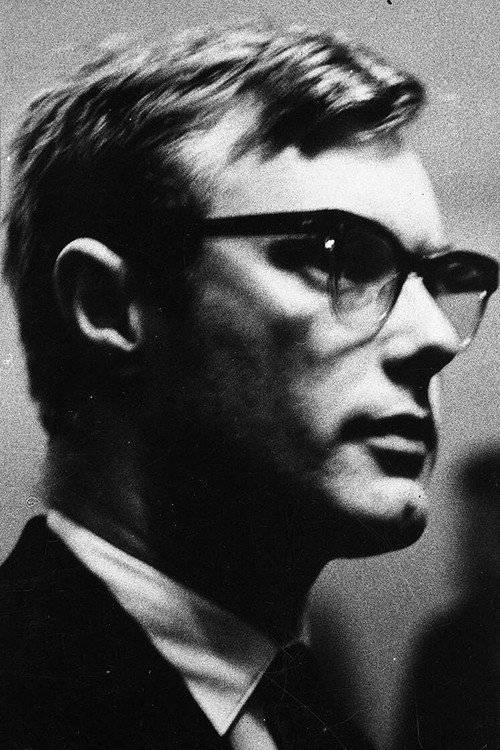
Krzysztof Komeda

Personal Info

Known For

Sound

Known Credits

0.7687

Gender

Male

Birthday

27-Apr-1931

Age

(95 years old)

Place of Birth

Poznań, wielkopolskie, Polska

Also Known As
  • Christopher Komeda
  • Krzysztof Trzciński-Komeda
  • Krzysztof Komeda-Trzciński
  • Krzysztof Trzciński

Krzysztof Komeda

Biography

Krzysztof Trzciński (27 April 1931 – 23 April 1969), known professionally as Krzysztof Komeda, was a Polish film composer and jazz pianist widely regarded as one of the most influential Polish musicians. He is best known for writing the scores for Roman Polanski's films Knife in the Water (1962), Cul-de-sac (1966), The Fearless Vampire Killers (1967), and Rosemary’s Baby (1968). Komeda's album Astigmatic (1965) is often considered one of the most important European jazz albums. British critic Stuart Nicholson describes the album as "marking a shift away from the dominant American approach with the emergence of a specific European aesthetic." Komeda is also known for blending jazz with classical and traditional Polish music.


Credits

Rozmowy jazzowe Rozmowy jazzowe (1957) Character: Himself (uncredited)
The first Polish film about jazz and, at the same time, an unusual documentary record of a concert of two legendary music bands: Hot Club Melomani and The Komeda Sextet.
Komeda: A Soundtrack for a Life Komeda: A Soundtrack for a Life (2010) Character: Self (archive footage)
Krzysztof Komeda was a jazz pianist and film composer. With compositions like the lullaby for Rosemary's Baby (1968) by Roman Polanski, Komeda succeeded in writing his own chapter in the history of soundtracks. This documentary follows the life story of the composer by the means of his melodic sounds. It is a reflection on his soundtracks, which changed the common film scores forever. It is a contemporary document about the attitude to life in a time of social, political and cultural change after war, about work and exodus of Polish artists in the 50s and 60s. A story about how film music is created and how it affects people. Directors who worked with Komeda and who are also friends talk about him: Roman Polanski, Jerzy Skolimowski, Henning Carlsen and Andrzej Wajda. His wife, Zofia Komeda, and his sister, Irena Orlowska, recollect him.
Zezowate szczęście Zezowate szczęście (1960) Character: Soldier (uncredited)
To convince the prison warden against releasing him, a middle-aged Polish man recounts his life, one he considers to have been characterized by exceptionally bad luck.
Komeda, Komeda... Komeda, Komeda... (2012) Character: Self (archive footage)
A feature-length documentary on the life and work of jazz musician and composer Krzysztof Komeda.
Do widzenia, do jutra... Do widzenia, do jutra... (1960) Character: Pianist (uncredited)
Jacek is a handsome, charming young Pole who belongs to a drama company. One day, in the streets of Gdansk, he meets Marguerite, a beautiful, charming French girl. He falls for her but the young lady is whimsical...
Popioły Popioły (1965) Character: General Fiszer (uncredited)
Set in the time of Napoleon wars, shows how the wars swept over the unfortunate Polish country at the beginning of the XIX-th century. Story revolves around the Polish legion under command of General Dabrowski, who then fought on Napoleon's side with the hopes of Poland's revival.
Niewinni czarodzieje Niewinni czarodzieje (1960) Character: Self (uncredited)
A young doctor is tired of being sought by women. One night he meets a young girl who all but forces herself into his room where they talk of morals and love.


Our Work is

Designed, crafted, and built with ❤️ for fans of all kinds.


Anime | Movie
2024 Animeperson . All Rights Reserved