|
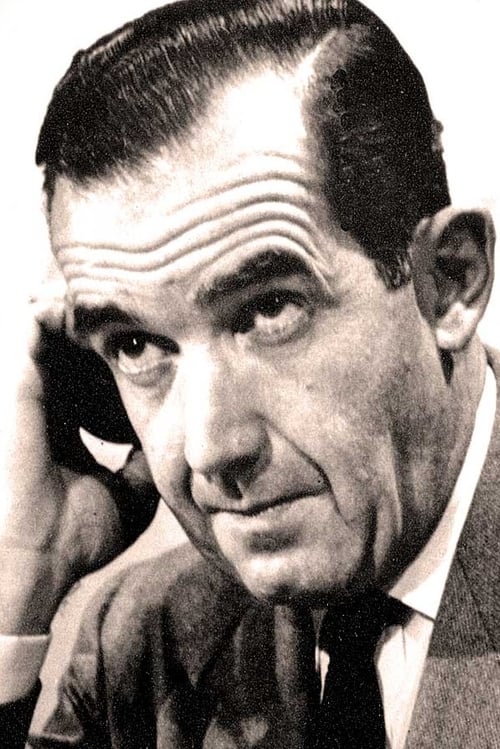
Edward R. Murrow - The Best Of Person To Person (2006)
Character: Host
Join television legend and renowned broadcast journalist Edward R. Murrow for this compilation of highlights from his 1950s hit talk show. On a minimal set and in casual style, Murrow invites a series of notable mid-century celebrities -- including Marilyn Monroe, John F. Kennedy, Jacqueline Kennedy-Onassis, Marlon Brando, Sophia Loren, Elizabeth Taylor and Frank Sinatra -- to open up about their public and private lives.
|
|

|
Ethel (2012)
Character: Self (archive footage)
Filmmaker Rory Kennedy interviews her mother, Ethel Kennedy, who discusses family, marriage and politics.
|
|

|
The Challenge of Ideas (1961)
Character: Self- Narrator
Various celebrities and news-media figures discuss the polarization of politics between the Western Allies of the United States and the Soviet bloc, pointing out the need for vigilance and action to protect democracy in the U.S. and abroad.
|
|

|
CBS Reports: Harvest of Shame (1960)
Character: Himself
In this CBS News production broadcast on Thanksgiving 1960, Edward R. Murrow points out the plight of migrant farm workers in America. Topics range from the harsh living conditions, endless travel, low wages, and poor opportunities for their children.
|
|
|
|
Television: The First Fifty Years (1999)
Character: Self (archive footage)
Trace the history of television and its impact on American culture with clips, newsreels, and exclusive interviews from television greats like Walter Cronkite, Carol Burnett, and Jay Leno.
|
|

|
The Eighty Days (1944)
Character: Self (commentator)
Humphrey Jennings’s Crown Film Unit short on the summer 1944 V-1 “doodlebug” campaign, tracking a salvo from the coast toward London as it runs Britain’s layered defenses—coastal AA guns, RAF fighters, and barrage balloons—capturing both interception and impact in a stark report of terror and resilience.
|
|
|
|
Dover (1942)
Character: Himself - Commentator
Documentary short featuring a visit by American newsman Edward R. Murrow to the English town of Dover during the Second World War.
|
|

|
Tennessee Williams: Orpheus of the American Stage (1994)
Character: Self (archive footage)
A study of Tennessee Williams's life and work as a whole, ranging from his youth in Mississippi and in St. Louis to success and acclaim, followed by the final difficult years. Includes some of the most celebrated scenes from film adaptations of Williams' work, among them extracts of A Streetcar Named Desire (1951),Cat on a Hot Tin Roof (1958), Night of the Iguana, The (1964), and Suddenly, Last Summer (1993) (TV). Contains footage of Williams being interviewed, including conversations with David Frost, 'Edward R. Murrow (I)', and Melvyn Bragg, as well as reminiscences from people who knew and worked with him, among them Edward Albee, Gore Vidal, and his lifelong friend, Lady Maria St. Just. Features readings from Elia Kazan's Notebook by Kim Hunter.
|
|

|
Survival Under Atomic Attack (1951)
Character: Narrator (voice)
A Civil Defense film that focuses on what the average American can do to protect himself if caught out in the open or at home during a nuclear attack.
|
|
|
|
Is Everybody Listening? (1947)
Character: Newscaster
A documentary about the 82% of US citizens that listen to the radio for their entertainment, news and sport.
|
|

|
Small World: Vivien Leigh (1958)
Character: Self
Acclaimed film and theatre actress Vivien Leigh, producer Samuel Goldwyn and critic Kenneth Tynan join radio and TV broadcaster Edward R. Murrow on his television program Small World for a filmed conversation.
|
|
|
|
The Lost Class of '59 (1959)
Character: Self
CBS News correspondent Edward R. Murrow reports on the integration problem in Norfolk, VA. and the civil rights issues involved in educating children.
|
|
|
|
Remembering Marilyn (1988)
Character: Self (archive footage)
A documentary about the life of actress Marilyn Monroe, commemorating the 25th anniversary of her death. Lee Remick is the host and narrator.
|
|

|
The Night America Trembled (1957)
Character: Presenter
A recreation and commentary on how people reacted to the radio broadcast of The War Of The Worlds in 1938. [An episode of the CBS anthology series "Studio One".]
|
|

|
Backstory: 'How Green Was My Valley' (2000)
Character: Self (archive footage)
Documentary about how the creative energies of Darryl F. Zanuck and John Ford combined to forge an enduring masterpiece despite the challenges of wartime production.
|
|
|
|

|
One Plane, One Bomb (1953)
Character: Self - Narrator
A 1953 U.S. civil defense preparedness film simulating an undetected air attack on New York City to promote civilian aircraft-spotter volunteer programs, narrated by Edward R. Murrow and directed by Don Hewitt.
|
|

|
The Soul of America (2020)
Character: Self (archive footage)
Writer, journalist, Pulitzer Prize-winning historian and presidential biographer John Meacham offers his timely and invaluable insights into the country’s current political and historical moment by examining its past. Based on his 2018 bestseller of the same name.
|
|

|
Brando (2007)
Character: Self (archive footage)
The life and legacy of Marlon Brando and how he changed acting.
|
|

|
This Is England (1941)
Character: Narrator
Edward R. Murrow narrates Humphrey Jennings' short documentary about life in England during wartime.
|
|

|
Sink the Bismarck! (1960)
Character: Himself - Edward R. Murrow
The story of the breakout of the German battleship Bismarck—accompanied by the heavy cruiser Prinz Eugen—during the early days of World War II. The Bismarck and her sister ship, Tirpitz, were the most powerful battleships in the European theater of World War II. The British Navy must find and destroy Bismarck before it can escape into the convoy lanes to inflict severe damage on the cargo shipping which was the lifeblood of the British Isles. With eight 15 inch guns, it was capable of destroying every ship in a convoy while remaining beyond the range of all Royal Navy warships.
|
|

|
Around the World in 80 Days (1956)
Character: Prologue Narrator
Based on the famous book by Jules Verne the movie follows Phileas Fogg on his journey around the world. Which has to be completed within 80 days, a very short period for those days.
|
|

|
McCarthy (2020)
Character: Self - (archive footage)
"McCarthy" chronicles the rise and fall of Joseph McCarthy, the Wisconsin senator who came to power after a stunning victory in an election no one thought he could win. Once in office, he declared that there was a vast conspiracy threatening America — emanating not from a rival superpower, but from within. Free of restraint or oversight, he conducted a crusade against those he accused of being enemies of the state, a chilling campaign marked by groundless accusations, bullying intimidation, grandiose showmanship and cruel victimization. With lawyer Roy Cohn at his side, he belittled critics, spinning a web of lies and distortions while spreading fear and confusion. After years in the headlines, he was brought down by his own excesses and overreach. But his name lives on linked to the modern-day witch hunt we call “McCarthyism.”
|
|

|
The Movie Orgy (1968)
Character: Self (archive footage)
Clips from assorted television programs, B-movies, commercials, music performances, newsreels, bloopers, satirical short films and promotional and government films of the 1950s and 1960s are intercut together to tell a single story of various creatures and societal ills attacking American cities.
|
|

|
Thomas Hart Benton (1989)
Character: Himself (archive footage)
Thomas Hart Benton's paintings were energetic and uncompromising. Today his works are in museums, but Benton hung them in saloons for ordinary people to appreciate.
|
|

|
Mike Wallace Is Here (2019)
Character: Self (archive footage)
For over half a century, 60 Minutes' fearsome newsman Mike Wallace went head-to-head with the world's most influential figures. Relying exclusively on archival footage, the film interrogates the interrogator, tracking Wallace's storied career and troubled personal life while unpacking how broadcast journalism evolved to today’s precarious tipping point.
|
|

|
Satchmo the Great (1957)
Character: N/A
In this 1957 biography film of the jazz-great Louis "Satchmo" Armstrong, he and his band tour the world as American good-will ambassadors bring jazz at its best to the people of the world. Within the film, the life of Louis Armstrong is portrayed through the music. One of the outstanding scenes in this "biography/docudrama" shows blind songwriter W. C. Handy, with tears streaming down his face, as Armstrong, backed by Leonard Bernstein leading the New York Philharmonic Orchestra, play Handy's immortal "St. Louis Blues."
|
|

|
Maria by Callas (2017)
Character: Self (archive footage)
Told through performances, TV interviews, home movies, family photographs, private letters and unpublished memoirs, the film reveals the essence of an extraordinary woman who rose from humble beginnings in New York City to become a glamorous international superstar and one of the greatest artists of all time.
|
|