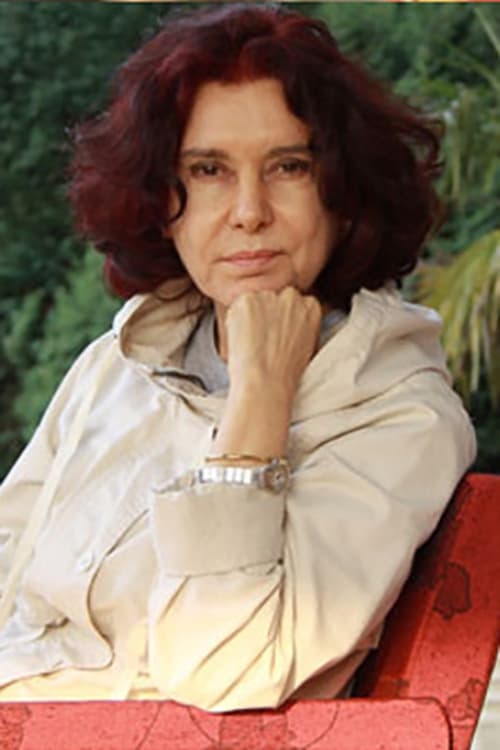
Ana Carolina
Personal Info
Directing
0.8279
Female
27-Sep-1943
(83 years old)
São Paulo, São Paulo, Brazil
- NO INFO PROVIDED
Ana Carolina
Biography
Ana Carolina (born 27 September 1943) is a Brazilian film director and screenwriter. She directed seven films between 1969 and 2003. In 1978, she was a member of the jury at the 28th Berlin International Film Festival. Her 1982 film Heart and Guts was screened in the Un Certain Regard section at the 1982 Cannes Film Festival. Ana Carolina Teixeira Soares attended school with the intention of becoming a doctor, but instead changed direction and became a filmmaker. She graduated in 1964 from University of São Paulo Med School. Several years later she went to a School of Physiotherapy, taking special interest in university politics. She also spent a few of her early years in a Renaissance band called "Musikantiga". She was highly focused in her early years as a filmmaker, as she made 11 documentaries in her first eight years in the business (her first being in 1967, last in 1974). Her first film released in 1977 was titled Mar de Rosas, translated into Everything is Fine. The film is shot from a feminist perspective with interpretations open to the viewer. Mar de Rosas tells the story of a woman that slits her husband’s throat and flees with her child. It provides commentary on patriarchy and feminist discontent. This discontent is not strictly limited to the characters within the fictional landscape and speaks much more broadly to the nation at whole. In an interview based on audacity in cinema, Carolina had much to say in regards to the censorship she faced in her time making films in Brazil. She uses words such as hysterical and neurotic to describe the impact it had on her production of films. She claims that the limitations placed on her work actually caused her to be more rebellious and this influenced her work to be even more provocative. She goes on to admit that her work in Mar de Rosas is meant to be interpreted as an allusion to the outside world. Carolina had a highly influential role as a filmmaker in one of the most restrictive times in Brazil, the Military Dictatorship (1964-1985). Her battle against censorship trail-blazed a better path to social and political commentary in film. She fought against the censorship of films, but also the censorship of ideas. Description above from the Wikipedia article Ana Carolina (director), licensed under CC-BY-SA, full list of contributors on Wikipedia.
Credits
|
||
|
||
|
||
|
||
|
||
|



