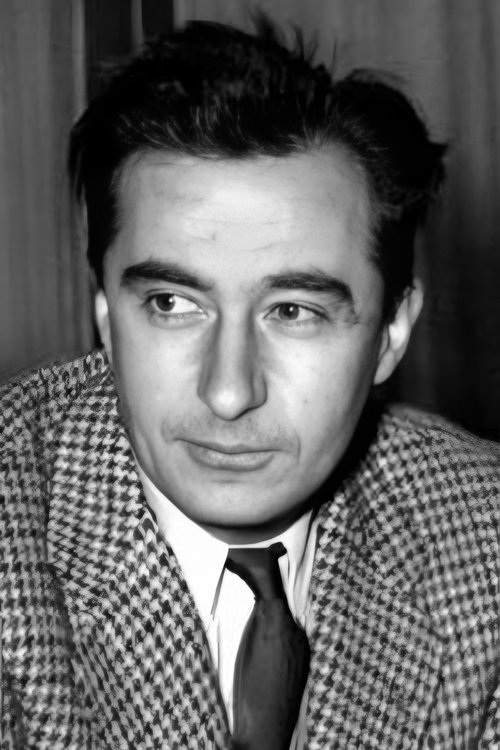
Marcel Ichac

Personal Info

Known For

Directing

Known Credits

0.2386

Gender

Male

Birthday

22-Nov-1906

Age

(120 years old)

Place of Birth

Rueil-Malmaison, Hauts-de-Seine, France

Also Known As
  • NO INFO PROVIDED

Marcel Ichac

Biography

Marcel Ichac, born October 22, 1906 in Rueil-Malmaison (Seine-et-Oise) and died April 9, 1994 in Ézanville (Val-d'Oise), was a French filmmaker, photographer, explorer, and mountaineer. He was the brother of Pierre Ichac (1901-1978). "A great master of documentary filmmaking," according to historian Jean Tulard, Marcel Ichac is particularly considered "the greatest filmmaker specializing in mountain films in France and undoubtedly in the world" of his generation by Georges Sadoul. Initially a skier and mountaineer, a great witness to French mountaineering, Marcel Ichac went on to become, through the diversity of the spaces he explored, the filmmaker of French exploration in the 1930s and 1950s (the first two French expeditions to the Himalayas in 1936 and 1950, scuba diving with Jacques-Yves Cousteau, Greenland with Paul-Émile Victor, the world's first caving documentaries, notably with Norbert Casteret, etc.). Marcel Ichac revolutionized documentary filmmaking with his desire to place the viewer at the heart of the action, obsessing over authenticity. This required, beyond accompanying the athlete in his efforts, technical innovations (the widespread use of lightweight cameras, whereas the cameras of the time were generally heavy and fixed), artistic innovations (the subjective camera, mounted on skis, carried on the shoulder, etc., shooting from the mountaineer's perspective), and narrative innovations. Marcel Ichac is considered a pioneer of "cinema verité" and docu-fiction. Beyond that, Marcel Ichac played a pioneering role, both in the technical field (notably with the production of the first French film in CinemaScope, etc.), institutions (founding the Group of Thirty to promote short films), and individuals (launching Jacques Ertaud, Jean-Jacques Languepin, Gérard Oury, Jean-Louis Trintignant, and Robert Enrico into the film industry). Marcel Ichac received the highest accolades in world cinema (an Oscar in Hollywood, awards at the Cannes Film Festival and the Venice Film Festival, not to mention festivals specializing in mountain and exploration cinema). Marcel Ichac boasted over a hundred ascents to his name as a mountaineer. He was a member of the Explorers Club of New York, the French Society of Explorers, and the Groupe de Haute Montagne (GHM), as was his wife, Gabrielle Ichac-Lartigue, herself an experienced mountaineer. When high mountain climbing was closed to him at the age of 70, Marcel Ichac took up running and long-distance walking. He regularly competed in the Millau 100K (France) and the New York City Marathon, where he won first place in the Diamond Age category for those over 80 in 1986.


Credits

Sensation Alpen Sensation Alpen (1966) Character: Self
From Trento to Chamonix, via Zermatt; from the Morgiou cove to the Eiger's north face; from Planica to the Lavaredo peaks, the Alps are depicted, illustrated, and magnified in all their unique and sublime beauty, through the sports practiced there and the most typical customs and traditions of their inhabitants. A helicopter rescue and a parachute jump from the Red Wall by Wolfgang Weizenbocks are experiences not to be missed.
Tempête sur les Alpes Tempête sur les Alpes (1945) Character: Self
Marcel Ichac captures the mountain warfare of the French Alps in World War II, the highest battles to take place during the war. The film also features footage of the liberation of Torino, Italy.
Quand Les Alpinistes Font Leur Cinéma Quand Les Alpinistes Font Leur Cinéma (2000) Character: Self
Many mountaineers as part of their activity have used cameras and films to allow us to participate through images in their adventures and their emotions. Many of them have become true film professionals: Joseph Vallot, Lionel Terray, Marcel Ichac, Renè Vernadet, Jean Afanasieff, Pierre Royer, Denis Ducroz, Kurt Diemberg and many others are among the conquerors of the image of the mountain. The film depicts the passion of these men on the highest mountains in the world... behind the lens.
Victoires sur l'Himalaya Victoires sur l'Himalaya (1960) Character: Self
Retrospective of four major peaks climbed by French expeditions: Annapurna (8078m) in 1950; Makalu (8481m) in 1955; Mustagh Tower (7273m) in 1956 and Le Jannu (7710m) in 1962. A film by Lucien Berardini and Jean-Marie Perthus with the support of the French Alpine Club and the FFME (French Mountain and Climbing Federation).
Victoire sur l'Annapurna Victoire sur l'Annapurna (1953) Character: Self
In 1950, a French expedition led by Maurice Herzog went to central Nepal to conquer the highest peak (8,091 meters): Annapurna. The film is not only made of what we see, but even more of what we don't see. Its imperfections are the negative imprint of the adventure. Memory is the most faithful of films.
Karakoram Karakoram (1937) Character: Self
Account of the first French expedition to the Himalayas, which attempted to climb the hidden peak (Gasherbrum I) in 1936, from the preparations for the trip to the end of the ascent. After a long approach walk through quasi-desert regions, then on a huge glacier, the caravan of 700 porters arrives at the foot of Hidden Peak. The expedition was led by Henry de Ségogne, with Jean Charignon, Pierre Allain, Raymond Leininger, Jean Carle, Jean Deudon, Louis Neltner, Jacques Azémar, doctor Jeand Arlaud and director Marcel Ichac. Weather conditions, logistical problems and a strike among Sherpas forced the team to retire at 6900m on the south face. The film received the Silver Lion at the Venice Film Festival in 1938.


Our Work is

Designed, crafted, and built with ❤️ for fans of all kinds.


Anime | Movie
2024 Animeperson . All Rights Reserved
