|
Caballé, más allá de la música (2003)
Character: Herself
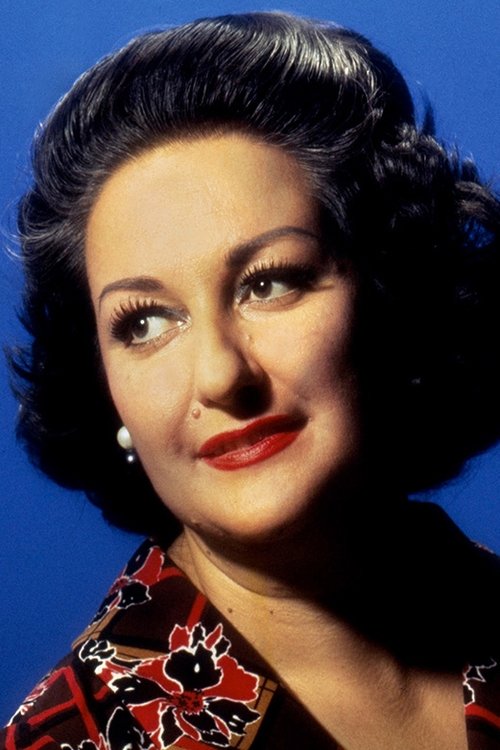
This documentary spans the life and career of Spanish soprano Montserrat Caballé, one of the very best ever - a legend, arguably the "queen" of all divas still singing. In locations throughout the world where Ms. Caballé sang, we hear interviews with Ms. Caballé, her family, and by opera and music giants like Claudio Abbado, José Carreras, Giuseppe Di Stefano, Plácido Domingo, Renée Fleming, Dame Joan Sutherland, and Zubin Mehta, also appearing often in clips showing joint collaborations. Of these, the film includes passages from Caballé's most acclaimed roles such as "Norma"', "Tosca" , "Turandot" and her earliest recorded live performance (1966) as "Anne Boleyn," in addition to poignant and powerful live concert duets with fellow Spaniards Plácido Domingo, Juan Pons, and José Carreras.
|
|

|
Romanza final (Gayarre) (1986)
Character: Soprano
Biography of Julian Gayarre (1844-1890), one of the best tenors of all times. At 19, a professor at the Conservatory of Music in Madrid heard him singing for the first time and offered him a scholarship to continue his studies. His artistic life runs between continued success, becoming the world's greatest tenor. But in 1890, while singing at the Teatro Real in Madrid, a failure in his voice is like a cruel reminder of what would happen a few days later: his death at a young age. The doctors gave a diagnosis, but his friends know that Julian Gayarre died because he could not sing anymore.
|
|

|
Norma (1974)
Character: Norma
Oroveso, a Druid High Priest, gathers his people in a sacred forest and prays to their gods for help in vanquishing the Romans who have taken over Gaul. Unbeknownst to Oroveso, his daughter, Norma, a High Priestess, has for some time been the lover of Pollione, the leader of the Romans; she has, in fact, not only broken her sacred vow of chastity but has borne two children to the warrior. Norma uses her position to dissuade the Gauls from attacking the Romans, claiming that the gods have told her that the time is not favourable. Recorded at Théâtre Antique d'Orange, 1974
|
|

|
Freddie Mercury & Montserrat Caballé - La Nit (1988)
Character: Self - Performer
Mercury and Caballé singing "Barcelona" on October 8th 1988 at huge open air La Nit festival staged in Barcelona, which was held to celebrate the arrival of the Olympic Flag from Seoul.
|
|

|
Hérodiade - Gran Teatro del Liceo (1984)
Character: Salomé
A retelling of the story of John the Baptist, Salome, Herod Antipas and Herodias, but strikingly less psychological and bloody than Richard Strauss's opera "Salome".
|
|

|
Verdi: Simon Boccanegra (1985)
Character: Maria Boccanegra
The ambiguities of Verdi’s theatre are particularly clear in his baritone roles, among which is that of Boccanegra, corsair turned doge of Genoa and the troubled observer of the conflicts that tore apart 14th century landowners and peasants. An eminently political opera in which power struggles are interwoven with family conflicts, Simon Boccanegra echoes the life of its composer – the man who championed the cause of Italian unification and overcame the loss of his wife and children.
|
|

|
Freddie Mercury: The Untold Story (2000)
Character: Self
Freddie Mercury (1946-91) was not just a man with one of the most pure and amazing voices the world has heard, but he was also the lead singer for Queen, the most enthusiastic rock band in history.
|
|

|
Never Boring - The videos (2019)
Character: Self (archive footage)
Freddie’s promos and his stage performances with Montserrat Caballé include eight that have been painstakingly reassembled from the original 35mm film rushes to give them the best-ever visual and sound quality.
|
|
|
|

|
Informe general sobre unas cuestiones de interés para una proyección pública (1977)
Character: Self - Opera Singer
How does a country go from a dictatorship to a democracy? A detailed report on the political representation in the heart of the Spanish Transition, only a few months after General Franco’s death, when the sincere democratic vocation of Spanish people must effort to destroy, one heavy brick after another, the wall that those who supported the dictatorship and those who fought it from the exile built with resentment, hatred and prejudices.
|
|