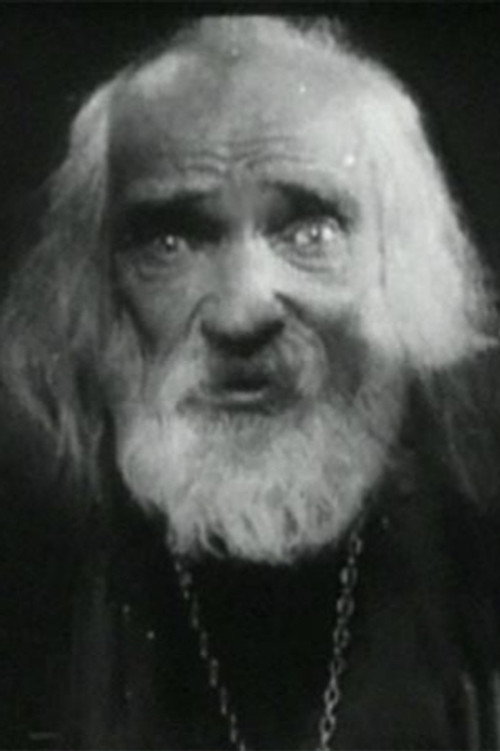
Кто ты такой? (1927)
Character: Worker (uncredited)
Adaptation of Jack Londos's short story "The South of the Slot". Partially lost.
Пунин и Бабурин (1919)
Character: Servant (uncredited)
Based on the first half of Ivan Turgenev's novel.
Победа женщины (1927)
Character: Baydurov's man
About life and customs in the boyar environment during the reign of Peter I.
Две души (1920)
Character: Old worker
Based on the novel "South of the Slot" by J. London. The movie didn't survive.
Дон Диего и Пелагея (1928)
Character: Pelagia's husband
The vain station master of a Russian train station out in the sticks has a quarrel with an old peasant woman and has her thrown in jail. The local party youth organisation finally manage to get her released, after having to cut through lots of red tape.
Процесс о трёх миллионах (1926)
Character: Priest (uncredited)
History of theft and double crossing when two thieves fall out over the theft of the money of the proceeds of the sale of a house by a banker to a religious community.
Земля (1930)
Character: Priest
During the agrarian collectivization process in the Soviet Union, Vasyl, a peasant member of the youth division of the Communist Party, gets a tractor with the help of a local party organization and plows private boundaries on kulak fields. However, this enthusiasm will cost him dearly.
Девьи горы (1919)
Character: N/A
The film tells the story of Judas and Satan wandering the world in search of a virgin who could become the mother of the new Evil.
Девушка с коробкой (1927)
Character: Natasha's grandfather
A Moscow hat shop girl chances upon a penniless young man who has arrived from the countryside for university and takes pity on him.
Праздник святого Иоргена (1930)
Character: Monk
The priests, stock market officials, and police conspire to squeeze income out of pilgrims come to see relics of a Christ like figure. A pair of con men try to pass of a resurrected saint.
Рваные башмаки (1933)
Character: Passerby (uncredited)
Working with children led Barskaya to create superb direct sound and an inspired style of shooting. Don’t look for conventional cinematic syntax here. The film is chaotic in the way that Soviet films still knew how to be, and Langlois couldn’t help but be seduced by its rebellious spirit, its anarchy and love of children, comparable to Vigo’s Zero de conduite.
As well as being a film made with and for children, it offers a complex take on Western society. Pre-Nazi Germany is not named as such but is carefully reconstructed, possibly under advice from Karl Radek, and children offer a playful reflection of class struggle – doubly excluded, as proletarians and as minors. “They play in the same way that they live”, one intertitle says. The interaction between their comical games and the yet more ludicrous ones played by adults is developed on several levels.
Our Work is
Designed, crafted, and built with ❤️ for fans of all kinds.
