Gabriel Bacquier

Personal Info

Known For

Acting

Known Credits

0.3243

Gender

Male

Birthday

17-May-1924

Age

(102 years old)

Place of Birth

Béziers, Hérault, France

Also Known As
  • NO INFO PROVIDED

Gabriel Bacquier

Biography

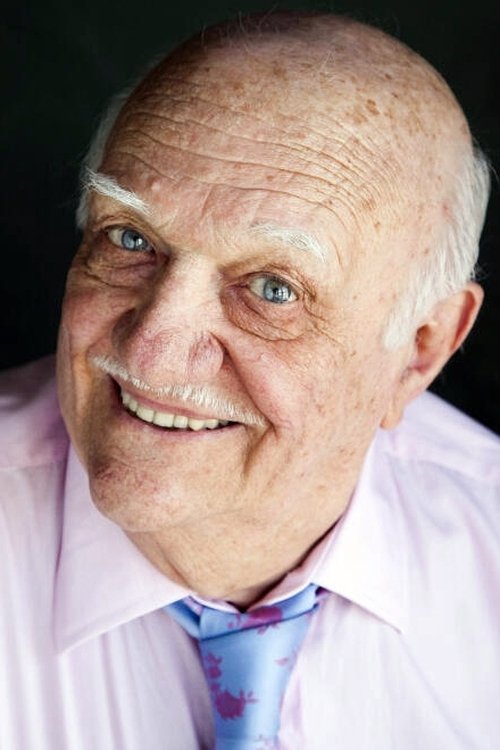
Gabriel Bacquier (17 May 1924 – 13 May 2020) was a French operatic baritone. One of the leading baritones of the 20th century and particularly associated with the French and Italian repertoires, he was considered a fine singing actor equally at home in dramatic or comic roles and gave regular song recitals. He was a long-term member of the Opéra-Comique and the Paris Opera, but forged a long career internationally at leading opera houses in Europe and the U.S. His large discography spans five decades, and he was considered as “the ambassador of French song”. Born Gabriel Augustin-Raymond-Théodore-Louis Bacquier in Béziers, France, on 17 May 1924, he was the only child of railway employees. As a young boy, he was fascinated by everything to do with singing: records, broadcasts and photos of singers. Leaving school aged 14, he worked at his uncle's print-shop, while studying in Montpellier to become a commercial artist, but during the Vichy regime, to avoid the round-ups and deportations by the Service du travail obligatoire, his parents arranged for him to do national service in the Chantiers de Jeunesse on the railways during the Occupation. As a teenager he took voice lessons with a Madame Bastard in Béziers in his free time and made his operatic debut during the war as Ourrias in Gounod's Mireille in the town arena. After World War II, he entered the Paris Conservatoire, receiving a scholarship because of his family's modest means, and graduated in 1950. He was a contemporary of, and shared his student life with, future leading French singers Régine Crespin, Xavier Depraz, Michel Sénéchal and Michel Roux. In his final year, the director of the Conservatoire, Claude Delvincourt, allowed him leave to work at the Opéra de Nice in the 1949–50 season, singing small roles in operas and operettas; this along with regular singing spots in cinemas gave him important experience and income before his next career steps. Having already gained a first prize for opéra comique in his penultimate year, he won first prize for singing and second prize for opera at the conclusion of his formal studies. Around this time he also took a course in dramatic art. He joined the opera company of José Beckmans in 1950, and was a member of La Monnaie in Brussels from 1953 until 1956, making his debut in the title role of Rossini's Il barbiere di Siviglia. There he sang the French repertory, both in opera (Gounod's Faust, Delibes' Lakmé, Massenet's Manon and Werther) and in operetta (Angélique, La belle Hélène, Les cloches de Corneville, Miss Heylett, Monsieur Beaucaire). He also appeared there in Puccini's La bohème and Madama Butterfly, and in Smetana's The Bartered Bride. While at the Monnaie, the French soprano Martha Angelici, whose husband was François Agostini, director of the Opéra-Comique at the time, sang in Les pêcheurs de perles with him; she suggested that he audition for the Paris company, which accepted him. ... Source: Article "Gabriel Bacquier" from Wikipedia in English, licensed under CC-BY-SA 3.0.

Credits

The Love for Three Oranges The Love for Three Oranges (1989) Character: Le Roi de trèfle
With neat, plain building-block designs by Jacques Rapp, Louis Erlo's energetically-staged production of Prokofiev's surreal fairy-tale for the Lyon Opera is full of cartoon characters and swift farce. Based on a play by Carlo Gozzi, "L'Amour des Trois Oranges" tells the story of a doleful, hypochondriac Prince, who can only be cured through laughter. When he breaks into hysterics at the expense of the evil witch Fata Morgana, she curses him. His fate is to fall in love with three oranges
Il trittico Il trittico (1981) Character: Gianni Schicchi
A trio of operas in three short stories - the first a gruesome murder melodrama, the second is a passionate tearjerker, and the third is a dark comedy of death and an inheritance. Each story is strikingly different from the preceding one.
Salzburg MarionettenTheater: Così fan tutti Salzburg MarionettenTheater: Così fan tutti (1995) Character: Don Alfonso
Così fan tutte, comic opera in two acts by Wolfgang Amadeus Mozart that premiered in Vienna on January 26, 1790. It is the last of his three operas with librettist Lorenzo da Ponte, the first two being The Marriage of Figaro (1786) and Don Giovanni (1787). Presented by the Salzburg Marionette Theatre with narration by Sir Peter Ustinov.
Falstaff Falstaff (1979) Character: Falstaff
Falstaff Gabriel Bacquier · Karan Armstrong Richard Stilwell · Max-René Cosotti · John Lanigan Wiener Philharmoniker Georg Solti Directed by Götz Friedrich
Les Contes d'Hoffmann Les Contes d'Hoffmann (1993) Character: Spalanzani / Crespel / Schemil
Live performance from the Opéra National de Lyon.
Manon des sources Manon des sources (1986) Character: Victor
In this, the sequel to Jean de Florette, Manon has grown into a beautiful young shepherdess living in the idyllic Provencal countryside. She plots vengeance on the men who greedily conspired to acquire her father's land years earlier.
The Metropolitan Opera: Don Giovanni The Metropolitan Opera: Don Giovanni (1978) Character: Leoporello
Imbuing the familiar Don Juan myth with a captivating combination of comedy, seductiveness, danger, and damnation, Mozart created an enduring masterpiece that has been a cornerstone of the repertory since its 1787 premiere. An early entry in the Met’s series of PBS telecasts, this 1978 performance captures a young James Morris in a smooth portrayal of the title role, with the legendary Joan Sutherland showing off her unsurpassed technique as Donna Anna and Gabriel Bacquier as a masterful Leporello.
Don Pasquale Don Pasquale (1979) Character: Pasquale da Corneto
This John Dexter production, designed by Desmond Heeley, was a parting gift to the great American soprano Beverly Sills, who bid farewell to the Met as Norina, the smart young widow at the center of Donizetti’s comedy. The sensational Alfredo Kraus sings her beloved Ernesto. Håkan Hagegård, in his Met debut role and season, is Dr. Malatesta, the man who helps the young couple trick the crusty old bachelor of the title (Gabriel Bacquier at his comical best) into a fake marriage. This being a Donizetti comedy, it all turns out perfectly well at the end—and getting there is pure operatic fun.
Salzburger Marionettentheater: Les Contes d'Hoffmann Salzburger Marionettentheater: Les Contes d'Hoffmann (2019) Character: N/A
In Luther's beer-cellar, lusty singing extols the virtues of beer and wine. For this evening, the Muse decides to deflect the poet Hoffmann's attention from amorous escapades, so that he will devote himself entirely to his art. Hoffmann tells of the three unhappy loves of his life: Olympia, Antonia and Giulietta.


Our Work is

Designed, crafted, and built with ❤️ for fans of all kinds.


Anime | Movie
2024 Animeperson . All Rights Reserved
