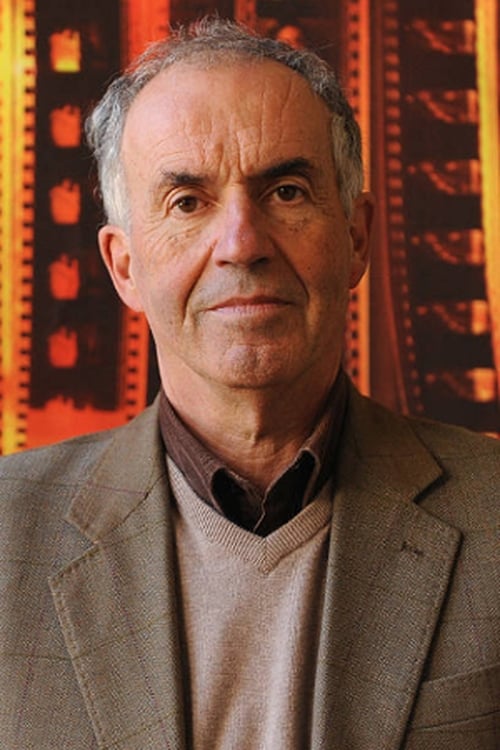
Massimo Bacigalupo

Personal Info

Known For

Directing

Known Credits

0.2778

Gender

Male

Birthday

20-Apr-1947

Age

(79 years old)

Place of Birth

Rapallo, Genoa, Italy

Also Known As
  • NO INFO PROVIDED

Massimo Bacigalupo

Biography

Massimo Bacigalupo (Rapallo, Genoa, Italy, 1947). His first works were produced for the local Amateur Film Club. For some years he helped organize the Rapallo International Amateur Film Festival. In 1966 his feature Quasi una tangente was awarded first prize in the Montecatini Film Festival. Bacigalupo, who was nineteen-year-old at the time, remembers that he was sitting in the audience with Lillian Gish and Anita Loos, who happened to be visiting Montecatini (Lillian was a friend of Massimo’s parents). Early on, through his personal acquaintance with poet Ezra Pound, Bacigalupo met film-makers and associates of the New American Cinema, among them Guy Davenport, Stan Brakhage, Gregory Markopoulos, Jonas Mekas, and Abbott Meader. In 1970 he prepared an Italian translation of Brakhage’s Metaphors on Vision. He brought to Rapallo in 1964 a selection of American films, among them works by Ron Rice and Maya Deren, which made a lasting impression. In 1966-71 he was a university student in Rome, where he was a founding member of the Italian Film-makers’ Cooperative, and was involved in producing and distributing independent films. In 1968 he shot 200 Feet for March 31, an uncut and silent 8mm film- happening. He went on in 1969-70 to create Eringio, a series of four films running over two hours. The title refers to Dürer’s self-portrait, and this film quartet amounts to a collective self-portrait of the student and art world in Italy at the time. The longest film of the series, Migration, a celebration of the Great Mother and her many incarnations, was premiered at the 1970 London Film Festival. Bacigalupo travelled with a showcase of Italian underground films to Denmark, Sweden, Germany (1970), and later Spain (1974) and England (Tate Gallery, 1983). He enrolled as a graduate student at Columbia University, receiving his Ph.D. in American literature in 1975. Warming Up, a color film shot in Italy and America, was premiered at the Anthology Film Archives, NYC, on Bacigalupo's 26th birthday, April 20, 1973. In 1975 he shot Postcards from America, a dream travelogue, and Into the House, an homage to his American mother’s family. Subsequently Bacigalupo has been chiefly active as a scholar, critic and educator. He is Professor of American Literature at the University of Genoa and has received numerous awards for his work as a translator, chiefly of English and American poetry. He lives in Rapallo.

Credits

Political Portraits Political Portraits (1969) Character: Himself
Dedicated to Dieter Meier. voice-over by Gregory Markopoulos, reading an excerpt in English translation of Paul Valéry’s L’Homme et la nuit (Man and the Night).
Dei Dei (1968) Character: N/A
The construction of the film is very simple. Most of the time we see faces in close-up. Three pairs of faces, usually, on three different levels of superimpositions. At first, the faces are very theatrical, made-up. It's not clear whether they are men or women. They move only slightly. They are, indeed, godlike. As the film progresses, very unnoticeably, these faces begin to gain more life and masculine and feminine qualities. At the end of the film, after three hours, the faces are very real, and very human, and sexes and ages are very clearly defined: men, women, children.
Coda Coda (1970) Character: N/A
A conclusion and recapitulation of the Eryngium cycle, Coda deals directly with the theme of self-portraiture. The first shot alludes to the end of Erichvon Stroheim's Foolish Wives, where the corpse of the hero-director is dispatched in a man-hole. Other dramatic self-portraits follow: Caravaggio's Goliath, Dante's Sestina (read by the film-maker), and Dürer's Self-portrait with Eryngium. The abandoned villa of Migrazione is revisited. But the finale is hopeful.
The Last Summer The Last Summer (1969) Character: N/A
Observations of a space and (last) time, of a landscape and the people who inhabit it. The first chapter of the Flowers of Eringyum cycle, the film portrays the family background where the individual journey begins, the rituals of middle-class life, their representations (also in home movies), and what they may conceal.
Erinnerung An Die Zukunft (Rushes) Erinnerung An Die Zukunft (Rushes) (1970) Character: N/A
Unfinished feature film by Piero Bargellini.
Bacino Casa del lupo o di Tonino Massimo e Piero Bacino Casa del lupo o di Tonino Massimo e Piero (1970) Character: N/A
It exists only in a fragmented state.
A Patrizia: l’irrealtà ideale, l’oggetto d’amore A Patrizia: l’irrealtà ideale, l’oggetto d’amore (1970) Character: N/A
A silent film starring poetess Patrizia Vicinelli, shot in Turin and Morocco between 1968 and 1970. “We set out and traveled far because Patrizia had called us. The film bears witness to what we saw there and what we found upon returning home—the two things ideally united. In addition, it contains my personal inventory of love and visions, as well as the search for love, navigating between reality and unreality along the ideal thread and the obsession of the mind.”
Canto infinito Canto infinito (2025) Character: N/A
Tonino De Bernardi and Massimo Bacigalupo met in the second half of the 60s and since then they have always remained friends, the two of them and their families. Massimo appears in several of Tonino's films and Tonino is in some of Massimo's films, an uninterrupted relationship, theirs, which has been a source of comparison and sharing for both.
Lingue di luce – M. Bacigalupo racconta il suo cinema Lingue di luce – M. Bacigalupo racconta il suo cinema (2025) Character: Himself - director
Massimo Bacigalupo, in his house in Rapallo, talks about his cinema, which passed through the festivals of the FEDIC circles and then in the lively and active Rome at the turn of the 1960s and 1970s. Massimo talks about his films and recalls his encounters with Mekas and Markopoulos, the fundamental one with Tonino De Bernardi, Pia Epremian and the Turin group, the vicissitudes of independent cinema in Italy and the relationship with the USA.
365 Day Project 365 Day Project (2007) Character: Self
This exhibition focuses on Jonas Mekas’ 365 Day Project, a succession of films and videos in calendar form. Every day as of January 1st, 2007 and for an entire year, as indicated in the title, a large public (the artist's friends, as well as unknowns) were invited to view a diary of short films of various lengths (from one to twenty minutes) on the Internet. A movie was posted each day, adding to the previously posted pieces, resulting altogether in nearly thirty-eight hours of moving images.


Our Work is

Designed, crafted, and built with ❤️ for fans of all kinds.


Anime | Movie
2024 Animeperson . All Rights Reserved
