|
ひばり・チエミのおしどり千両傘 (1963)
Character: Horigome Kazuma
A princess seeks adventure and true love, with help from her loyal servant.
|
|

|
夜の牙 (1958)
Character: N/A
A young doctor discovers that the city hall of records has a record of his death. He and some friends try to seek out the person who reported it, and uncover a shady group of criminals with a sinister plot.
|
|

|
逆光線 (1956)
Character: Fumio Maki
Reiko, a free-spirited college girl not bound by social conventions, ends up having an affair with an older, married man even though she already has a boyfriend.
|
|
|
|
|
|
|
|

|
四季の愛欲 (1958)
Character: Shimizudani
A family is slowly falling apart: the father is absent from the start, the mother a kept woman thanks to her children, the son is being cheated on by his wife, one daughter is forced to marry an older man against her will, while the other has retreated into smug moral superiority.
|
|

|
黒い潮 (1954)
Character: N/A
A reporter Takuo, who is sleeping in the newspaper room of the Maichō newspaper company, receives a sudden report from a reporter that the missing Akiyama JNR president was found dead.
|
|
|
|

|
四萬人の目撃者 (1960)
Character: Arashi
Prosecutor Takayama investigates the sudden death of a third baseman in the middle of a game.
|
|

|
絶唱 (1958)
Character: Ôtani
The story of the tender love between Junki, the son of a wealthy landowner, and Kayuki, the daughter of a forester, who decided to unite their destinies against their parents' wishes. Neither war nor years of separation could kill this love. It was only cut short by Kayuki's tragic death.
|
|

|
沖縄の民 (1956)
Character: N/A
With the background of the Battle of Okinawa, he draws a semi-documentary image of each individual person under an unusual psychological state of war. Furukawa Takumi of “Backlight” is adapted and directed by Daiichi Ishino. Filmed by Yoshio Mamiya, “Smuggling of the body”. The main performers are Sachiko Sakai since the “Zoi Family”, Hiroyuki Nagato of the “Next door bride”, Shoji Yasui of the “Sentimental wife”, Takatoko of “Crying, the last Japanese fighter”, “Blue angry” Noriko Katsura, Shinzo three of "actress (1956)", Masao Oda, Nobuo Kaneko, Toru Abe, Hiroshi Nihonyanagi, Misako Tsubouchi.
|
|

|
最後の突撃 (1957)
Character: N/A
A narrative depicting the appearance of soldiers scattered in Rabaul during the Pacific War. The original work of Yoshinori Matsuura was dramatized by Toyama Tetsu of “Smuggling of the Body”, also directed by Yutaka Abe, and Shigeyoshi Mine of “Densuke's Propaganda” was in charge of the shooting. The main performers are Michitaro Mizushima of “Smuggling of the Body”, Ryoji Hayama of “The Sorrowful Garden”, Shoji Yasui of “The People of Okino”, Shiro Osaka of “Lonely Man”, “Tetsuji Kawakami Story 16” In addition to Hiroshi Nihonyanagi, Shinsuke Maki, Isamu Kosugi of the "Hunger Soul", Ko Mishima, Satoshi Nishimura, Saburo Hiromatsu, Hiroshi Kondo and others.
|
|

|
海の野郎ども (1957)
Character: N/A
A scrap iron carrier arrived at Tokyo bay. The ship swarmed with the stevedores, the souvenir seller and the hookers. The crews of ship were oppressed by arrogant captain and his officers. The crews caused an uprising. A manager of stevedore ordered his employee leader to suppress an uprising...
|
|

|
反逆児 (1961)
Character: N/A
Young lord Saburo Nobuyasu struggles to find comfort in life. His arranged marriage to Tokuhime, daughter of one-time family enemy Oda Nobunaga, provides little happiness. His manipulative mother adds further complications through her constant interference and attempts at defeating the Nobunaga family.
|
|

|
柳生武芸帳 独眼一刀流 (1962)
Character: N/A
In the fourth film in this exciting series, and the first since losing his left eye, Yagyu Jubei is charged again with the task of protecting the Yagyu Secret Scrolls. The two scrolls are held in separate locations to assure their safety. Within them there is information other than the techniques of the Yagyu Shin-kage style. They contain a secret that could throw the country into turmoil. Clan founder Yagyu Sekishusai had split the scroll into two parts to prevent its contents from being known to the public. This is Jubei's toughest assignment yet as he puts his life on the line to save the nation!
|
|

|
真昼の罠 (1960)
Character: Ken
On his way to Tokyo one night, a truck driver picks up a country girl and has his way with her amidst a forest. A few days later he loses his job after a run-in with some punks, but is offered a job by a gangster impressed by his fighting skills. He tries to make amends with the girl he ravished, but becomes caught up in the ways of the underworld...
|
|

|
緋ざくら小天狗 (1961)
Character: N/A
A story about a tomboy, Otoshi, who is good at singing, dancing and fencing.
|
|

|
香港の白い薔薇 (1965)
Character: Chief/Boss Otomo
Narcotics officer Matsumoto’s investigation into a drug smuggling ring leads him from Tokyo to Hong Kong, where personal ties and painful secrets unravel a complex web of betrayal. As love, family, and justice collide, Matsumoto must face a truth too deep to escape—and a loss too great to mend.
|
|

|
誘惑 (1957)
Character: Sôhei Tadokoro
Shokichi, the owner of the clothing store, lives with his daughter Hideko and plans to open an art gallery. One day, Hideko led a handsome art student, Shohei and a poor painter, Sohei. Sohei’s painting was praised by a great printer at the completion ceremony of the art gallery. Since he became successful as a painter, but he looked quite indifferent. Around the same time, Shohei’s sister brought Sohei’s pictures to the gallery and Shokichi noticed that she was a daughter of his first love.
|
|

|
人間の條件 第3部望郷篇/第4部戦雲篇 (1959)
Character: Minarai Shikan
Kaji, sent to the Japanese army labeled Red, witnesses cruelties in the army and revolts against the abusive treatment against a fellow recruit. He also sees his friend Shinjô defecting to the Russian border, and he ends in the front to fight a lost battle against the Russian tanks division.
|
|

|
又四郎行状記 神変美女蝙蝠 (1961)
Character: N/A
Rampant ronin Matashiro Sasai, finds himself embroiled in serious unrest after he rescues a geisha who is being kidnapped by a group of ronin.
|
|

|
禁じられた唇 (1958)
Character: N/A
A youth lyrical story of pure love of a girl who grew up in the Kyoto Gion quarter, with a geisha mother and sisters Maiko and a college student.
|
|

|
だから言ったじゃないの (1959)
Character: N/A
A film adaptation of the popular hit by glamorous singer Keiko Matsuyama.
|
|

|
女家族 (1961)
Character: N/A
A home drama about a mother and her three daughters, based on the novel by Fumiko Hayashi.
|
|

|
わかれ (1959)
Character: N/A
A mother and her daughter who run a quiet mountain hotel, and guests who visit the hotel. A girl who does not know what a broken heart is, the attractive joy of first love, and separation is like parting with life. The mother-daughter duet with Isuzu Yamada attracted a lot of attention at that time. Haruko Wanibuchi, demonstrated rare attractiveness and pure charm by playing a heroine living in a beautiful and pure first love.
|
|

|
刑事 (1964)
Character: N/A
The first film with Tetsuro Tamba as a detective. An exciting drama about the pursuit of a criminal, which takes place in Yokohama. Tamba enthusiastically plays a police inspector who pursues a criminal who kidnapped his sister.
|
|

|
若き日の次郎長東海一の若親分 (1961)
Character: N/A
He was married to his lover's butterfly and started a new residence. But good things do not last. In his uncle, Uzaemon in Kawashima, Yoshiji Akaji, Yoshimoto's lender, and Kanehira Akagi, the older brother of the former loan of Mishima, played a challenge. It is said to open the ladies' room to the settlement of Wada island. Although Jiro headed to Shigetsugu for arbitration, he was forced to surrender. In such a case, Jiro became chased by Kinpei and others.
|
|

|
峠 (1957)
Character: N/A
Adaptation of Jirō Osaragi's novel.
|
|

|
敵は本能寺にあり (1960)
Character: N/A
The plot is based on the novel "Akechi Samanosuke no Koi," the final work in a trilogy by Hiroshi Kato about the forced suicide of Oda Nobunaga at the temple Honnoji. Historically, the general Akechi Mitsuhide is credited with causing Nobunaga's downfall. Kato's novel focuses on Mitsuhide's nephew Samanosuke, who fought alongside his uncle during the assault on Honnoji.
|
|

|
江戸一寸の虫 (1955)
Character: N/A
This historical film depicts the life of a man who was at the mercy of the waves during transition from the end of the Edo period to the Meiji Restoration, and therefore, shows audience the dynamic change from Edo to Meiji. Before the war, the director, Eisuke Takizawa, together with the writers, formed a scenario writer group "Narutaki-gumi and they shot many historical masterpieces.
|
|

|
こころ (1955)
Character: Hioki Jiro
In the dying months of the Meiji era, a sympathetic student befriends a married couple, but soon realizes they share a curiously strained relationship stemming from an unknown incident in their past.
|
|

|
月は上りぬ (1955)
Character: Shōji
Mokichi Asai is a widowed father living in Nara with three daughters—Chizuru, Ayako, and Setsuko. The youngest, Setsuko, plays matchmaker for her older sisters, leading to humorous and awkward romantic entanglements.
|
|
|
|

|
実いまだ青し (1959)
Character: N/A
A youth lyrical painting depicting a sensitive young man with rich poetic feelings focused on the concerns and aspirations of a high school student.
|
|

|
夢の女 (1993)
Character: N/A
Set during the Meiji period (1868-1912), Kaede is the former mistress of a wealthy merchant. When he dies, she is forced out on the street and forced to give up her young daughter to the merchant’s family.
|
|

|
富士に立つ若武者 (1961)
Character: N/A
The epic battles between the Heike and Genji (Taira and Minamoto clans) take centerstage as the defeated leader of the Genji, Minamoto Yoritomo resolves to end his clan's exile and avenge the brutal loss in December, 1159 as they had fought under the white banner of the Emperor, while the Taira fought under their red flags in a battle to the death. The fight only took one day, with the Genji suffering utter defeat which led to their exile. His father, Yoshitomo, took responsibility for the loss and rather than live in humiliation, he decides to commit suicide with all his sons following him. However, the bravest warrior among them, Yoritomo stands tall and declares that he will not kill himself, but rather will fight to restore the clan.
|
|

|
雑居家族 (1956)
Character: N/A
Yasue (Todoroki) and Fumikichi (Oda), a married couple, have no children, but they take in children from other places and wind up raising three kids.
|
|

|
ろくでなし (1960)
Character: N/A
Yoshida's first feature follows the lives of young students against a background of jazz, emptiness and boredom. The plot is fairly simple: a "good-for-nothing" from a poor background falls in love with the young secretary of his rich friend's father. The woman senses good in him and tries to lead him on the right path.
|
|

|
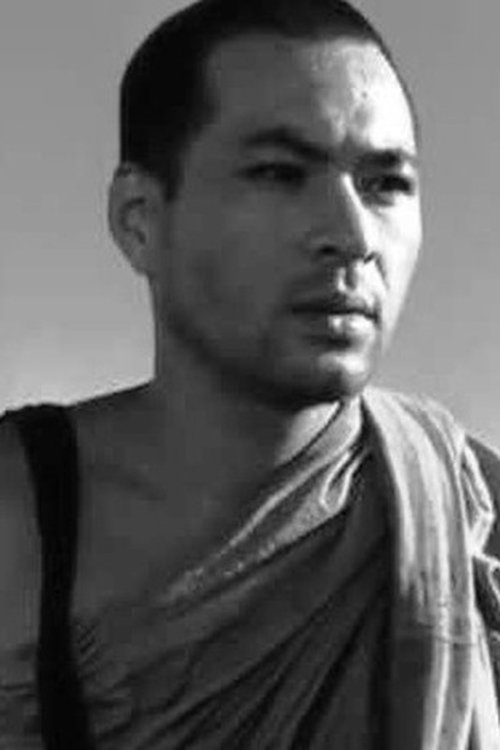
ビルマの竪琴 (1956)
Character: Mizushima
In Burma during the closing days of WWII, a Japanese soldier separated from his unit disguises himself as a Buddhist monk to escape imprisonment as a POW.
|
|

|
花のお江戸のやくざ姫 (1961)
Character: Shogun Iemitsu
Tsukitaro, a young man who comes to Edo, meets a blind girl named Ochiyo. Ochiyo’s father, the grinder Yasujiro, was asked to sharpen a sword called Kongomaru, which was planned to be presented to the shogun Iemitsu, but he died due to a yakuza attack. In addition, the sword was stolen, and Ochiyo’s sister was also kidnapped.
|
|

|
霧と影 (1961)
Character: N/A
A veteran reporter and a young journalist doggedly pursue clues through sheer persistence and intuition to unravel the mystery behind the sudden death of a teacher in the remote Hokuriku region. In pursuit of the truth, they are led to a web of corporate fraud, an inbred village, bundles of toilet paper, and flatfoots with something to hide as the bodies pile up.
|
|

|
赤穂城断絶 (1978)
Character: Uemon
This is the story of "The Forty-Seven Ronin." Based on historical events in 1701-2, the movie tells the tale of the Asano clan's downfall and the revenge of its former samurai on the perpetrator of the catastrophe. Lord Asano was goaded, or tricked, into drawing his sword inside the Shogun's palace -- a crime which carried the death penalty. The newly installed Shogun was furious at Asano and ordered all his clan's assets seized, meaning some 20,000 samurai and commoners were unemployed and landless at a stroke. Forty-seven of these ronin (masterless samurai) banded together to take attempt revenge on Lord Kira, who had goaded Asano into drawing his sword.
|
|

|
錆びたナイフ (1958)
Character: Prosecutor Karita
Udaka is a new, post-war city where corruption has already taken hold. A persistent district attorney wants to arrest and convict Katsumata, a laughing, self-confident thug. The D.A. gets an anonymous letter about the suicide five years' before of a city council member. Evidence about the case leads the D.A. to Tachibana, struggling to go straight after involvement with the mob and a prison sentence for killing the man responsible for the rape and suicide of his fiancée. One of Tachibana's friends is Keiko, the daughter of the dead councilman and the ward of another powerful official. How do these stories connect?
|
|

|
ひばりのおしゃれ狂女 (1961)
Character: N/A
Under a decree by the Shogun, people of all classes are forced to lead a frugal lifestyle. However, Omitsu, a woman who is thought to have gone insane after the sudden death of her father, openly disobeys this order and goes around town fancifully dressed. Unknown to all around her, Omitsu is merely acting, using her perceived madness to roam around town conducting her own secret investigation into her father's death. Will her skillful ruse help her to reveal the truth?
|
|

|
爆薬に火をつけろ (1959)
Character: Susumu Suda (Fūtarō, a former doctor)
Three young men face off against corrupt officials and Yakuza in order to complete a reclamation project of the coastal embankment, who try to derail the project every step of the way until a tsunami hits, putting everyone in danger.
|
|