|
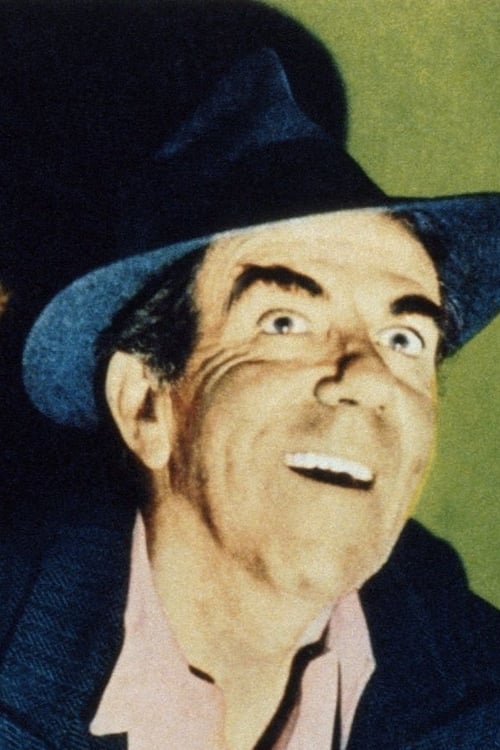
Dark Meeting (1956)
Character: Henney
Billie hires an odd man as the new pin boy at her bowling alley, but quickly fires him because of his violent outbursts. Shortly thereafter, she finds out he's a murderer who escaped from prison, which makes his later, sudden, after hours appearance at the bowling alley feel more than a little threatening.
|
|

|
Slappily Married (1946)
Character: Fast Talker (uncredited)
Joe's wife, who thinks he's been carrying on with another woman, moves out.
|
|

|
Blonde Ransom (1945)
Character: Piano Player (uncredited)
Vicki Morrison is the niece of the irascible old scoundrel Uncle William Morrison. When Vicki's boyfriend and owner of a Broadway nightclub Duke Randall needs $63,000 in a hurry, Vicki fakes her own kidnapping to raise the ransom money from her uncle. Things get sticky when the phony abduction turns real.
|
|

|
Behind City Lights (1945)
Character: Charles Matthews
This Republic programmer stars Lynne Roberts as a country gal who is slickered by a couple of city-fied jewel thieves, played by Peter Cookson and Jerome Cowan. Roberts is set up for a patsy by these two rogues, and nearly ends up in jail-and later on, narrowly escapes being rubbed out by gangsters.
|
|

|
Decision at Sundown (1957)
Character: N/A
A man and his partner arrive at a small Western town to kill its most powerful man because the former blames him for his wife's death.
|
|

|
Voice of the Whistler (1945)
Character: Druggist (uncredited)
A dying millionaire marries his nurse for companionship, only to experience a miracle cure.
|
|

|
Adventures of the Texas Kid: Border Ambush (1954)
Character: Frank Blake
In TV's pioneer days when kids idolized the Lone Ranger, the Texas Kid was a knight errant of the frontier leading the fight for law and order alongside his Mexican companion Pepe. In this rarely-seen TV pilot, the Kid and Pepe intercede on behalf of the murdered rancher's daughter, openly defying the landgrabbers in a cow town so lawless that rustlers operate in broad daylight!
Shot at the Corrigan Ranch in 1950, TEXAS KID co-starred Mercury Records recording artist John Laurenz as Pepe and stuntman Hugh Hooker as the Kid. Hooker, a specialist in stunts involving horses and stagecoaches, often doubled Gene Autry and even produced a few movies, including the low-budget gem . That movie's star was Hugh's teenage son Buddy Joe Hooker, whose own subsequent, stellar stunt career inspired HOOPER (1978), Burt Reynolds' hit comedy tribute to movie stuntmen.
|
|

|
The Sea Hornet (1951)
Character: Padre Inn Bartender
"The Sea Hornet" was a merchant ship sunk, supposedly by a torpedo, less than a mile off the California Coast during World War Two. Six years later when his buddy is killed, attempting to blow up the sunken ship, on the orders of Suntan Radford and Tony Sullivan, deep-sea diver "Gunner" McNeil has his suspicions aroused... especially since Suntan is the daughter of the ship's captain that died when the ship sunk, and Sullivan was a crew member. Plus the fact the ship had over a million dollars in cash on board. During the course of his investigation, he becomes romantically involved with Ginger Sullivan
|
|

|
The Star (1952)
Character: N/A
Actress Margaret Elliot is well past her prime but refuses to retire from the acting business. Despite entreaties from both her daughter, Gretchen, and one-time professional colleague Jim Johannsen, Margaret remains convinced that she can regain her former glory. As she sets her sights on a coveted Hollywood role, Johannsen tries doggedly to get his unrequited love to see the folly of her ways.
|
|

|
The Square Jungle (1955)
Character: N/A
Grocery clerk Eddie Quaid, in danger of losing his father to alcoholism and his girl Julie through lack of career prospects, goes into boxing.
|
|

|
Airport (1970)
Character: Ted Fields (uncredited)
An airport manager tries to keep his terminals open during a snowstorm, while a suicide bomber plots to blow up a Boeing 707 airliner in flight.
|
|

|
A Lawless Street (1955)
Character: Bartender (uncredited)
A Marshal must face unpleasant facts about his past when he attempts to run a criminal gang out of town.
|
|

|
Alias the Champ (1949)
Character: Bert Tracy
Slammin’ Sammy Menacker is killed in the ring, and Gorgeous George is arrested for murder. Out to clear his name is his manager Lorraine and cop Ron Peterson, who was already on the scene to investigate the Mob’s influence on pro wrestling.
|
|

|
A Thousand and One Nights (1945)
Character: Retainer
On the run after being found sweet-talking the Sultan's daughter, Aladdin comes upon a lamp which, when rubbed, summons up Babs the genie. He uses it to return as a visiting prince asking for the princess's hand. Unfortunately for him, the sultan's wicked twin brother has secretly usurped the throne, someone else is after the lamp for his own ends, and Babs has taken a shine to Aladdin herself and is bent on wrecking his endeavours.
|
|

|
Romance on the High Seas (1948)
Character: Ship Purser (uncredited)
Georgia Garrett is sent by jealous wife Elvira Kent on an ocean cruise to masquerade as herself while she secretly stays home to catch her husband cheating. Meanwhile equally suspicious husband Michael Kent has sent a private eye on the same cruise to catch his wife cheating. Love and confusion ensues along with plenty of musical numbers.
|
|

|
The Gunfight at Dodge City (1959)
Character: Regan Pitchman (uncredited)
Fleeing to Dodge City after killing a man in self defence Masterson finds his brother Ed (Harry Lauter) running for sheriff of the town. When Ed is killed by hired guns of the corrupt incumbent Bat is determined to settle the score with violence but he is convinced by the townspeople that the best way to avenge his brother's death is by taking Ed's place on the ballot. Bat agrees and wins the election but his new role on the right side of the law will lead him to unexpected confrontations as he finds himself torn between his loyalties to his friends and his duties as sheriff.
|
|

|
The Opposite Sex (1956)
Character: Backstage Man (uncredited)
Former radio singer Kay learns from her gossipy friends that her husband, Steve, has had an affair with chorus girl Crystal. Devastated, Kay tries to ignore the information, but when Crystal performs one of her musical numbers at a charity benefit, she breaks down and goes to Reno to file for divorce. However, when she hears that gold-digging Crystal is making Steve unhappy, Kay resolves to get her husband back. The Opposite Sex is a remake of the 1939 comedy The Women.
|
|

|
Flamingo Road (1949)
Character: N/A
A stranded carnival dancer takes on a corrupt political boss when she marries into small-town society.
|
|

|
Ladies of the Chorus (1948)
Character: Joe (uncredited)
Former burlesque star May and her daughter Peggy dance in the chorus. When May has a fight with featured dancer Bubbles, Bubbles leaves the show and Peggy takes her place. When Peggy falls in love with wealthy Randy, May fears class differences may lead to misery.
|
|

|
Crashing Las Vegas (1956)
Character: The Croupier
An electric shock enables Sach to predict numbers, so the Bowery Boys are off to Las Vegas to win enough money at the roulette wheels to let their landlady buy an apartment building. Witnessing his winning streak, some gangsters decide to move in and find out his "system" for beating the odds.
|
|

|
Texas, Brooklyn & Heaven (1948)
Character: Barker (uncredited)
Eddie Tayloe's grandfather leaves him six thousand dollars and the money belt it came in, freeing Tayloe to leave his dull newspaper job in Texas and move to New York to become a playwright. Along the way, his car breaks down and a girl walking along the highway asks for a lift. It turns out she's a nice girl, named Perry, running away from a job at a gasoline station. Soon they're off to New York together, but part ways once they arrive. Time passes and Eddie is failing to sell his play; Perry is failing to find a job. Odd circumstances, involving an old pickpocket named Mandy, bring them together again.
|
|

|
I Love Lucy: The Movie (1953)
Character: Comic (archive footage)
The film plays out, with three first-season episodes edited together into a single story: "The Benefit", "Breaking the Lease", and "The Ballet", with new footage included between episodes to help transition the episodes into one coherent storyline. As the series routinely took the format of filming scenes in chronological order, this adds to the "show within a show within a show" format of the film, as viewers watch the cast perform the episodes live. The film itself ends with a "curtain call", as the cast comes out and Arnaz thanks the audience for their support.
|
|

|
Armored Car Robbery (1950)
Character: Mr. Kimball - Theatre Manager (uncredited)
While executing an armored car heist in Los Angeles, icy crook Dave Purvis shoots policeman Lt. Phillips before he and his cronies make off with the loot. Thinking he got away scot-free, Purvis collects his money-crazy mistress, Yvonne, then disposes of his partners and heads out of town. What Purvis doesn't know is that Phillips' partner, tough-as-nails Lt. Cordell, is wise to the criminal's plans and is closing in on his prey.
|
|

|
Arson for Hire (1959)
Character: Pop Bergen
Johnny Broderick, arson squad investigator, and his assistant, Ben Howard,, investigate a warehouse fire and find evidence of arson. Lawyer William Yarbo is behind the series of incendiary fires that have been plaguing the city. Keely Hariss, an actress, inherited the warehouse from her father. Yabro calls on her and says that he and her father had heavily insured the building and planned to burn it and collect, and also tells her she must accept half of the insurance money or he will see that she is blamed for the arson. "Pop" Bergen, the father of Marily Bergen, is the torch man hired by Yarbo, and he perishes in one of the conflagrations. Yarbo learns that Keely is cooperating with Broderick and he enters the movie studio where she is working, determined to kill her. Written By Les Adams
|
|
|
|

|
Linda, Be Good (1947)
Character: Eddie Morgan
A writer decides to join a burlesque show so that she can write an authentic expose of the business.
|
|

|
The Power of the Whistler (1945)
Character: Highway Patrolman
A woman uses a deck of cards to predict death within 24 hours for a stranger sitting at a bar, then tries to help him remember who he is based on items in his pockets.
|
|

|
The Disorderly Orderly (1964)
Character: Milton M. Mealy (as Frank Scannell)
Poor Jerome Littlefield. He wants to be a doctor – but that's not exactly the perfect career choice when you're hopelessly squeamish. So he settles for the job of orderly at the Whitestone Sanitarium, a career move that's guaranteed to keep the patients – and viewers – in stitches!
|
|

|
The Incredible Shrinking Man (1957)
Character: Barker
A dangerous combination of radiation and insecticide causes the unfortunate Scott Carey to shrink, slowly but surely, until he is only a few inches tall. His home becomes a wilderness where he must survive everything from spiders living in the cellar to his beloved cat.
|
|

|
French Leave (1948)
Character: Francois (as Frank Scannell)
Merchant seaman Skitch Kilroy (Jackie Cooper) and "Pappy" Reagan (Jackie Coogan)arrive in Marseilles, eager to resume their combative rivalry for Mimi. But they are ordered by their skipper Muldoon (Ralph Sanford) to remain on board and guard against theft of foodstuffs by a black market gang.
|
|

|
Song of the Open Road (1944)
Character: Bit Role (uncredited)
A beautiful child star tires of life in the spotlight and so disguises herself and sneaks off to join a Civilian Conservation Corps camp to work with normal kids. It doesn't take her long to discover that being "normal" isn't easy as it looks. When a crop is in danger of being ruined because there are not enough people to harvest it, the girl employs some of her famous colleagues to lend a hand. Songs include: "Too Much in Love," "Here It Is Monday," "Delightfully Dangerous," "Hawaiian War Chant" and "Notre Dame."
|
|

|
The Band Wagon (1953)
Character: Reporter (uncredited)
A Broadway artiste turns a faded film star's comeback vehicle into an artsy flop.
|
|

|
Rails Into Laramie (1954)
Character: Jonesy (uncredited)
A federal agent arrives in Laramie to try to find out who is behind the efforts to stop the construction of a new railroad track.
|
|

|
Remains to Be Seen (1953)
Character: Waiter (uncredited)
A singer and her apartment manager get mixed up in a creepy Park Avenue murder and find themselves facing danger at every turn.
|
|

|
Lost in a Harem (1944)
Character: Fruit Vendor (uncredited)
Two bumbling magicians help a Middle Eastern prince regain his rightful throne from his despotic uncle.
|
|

|
High Time (1960)
Character: Auctioneer at College (Uncredited)
Despite the dissapproval of his grown son and daughter, 51-year-old widdower and wealthy restauranteur Harvey Howard decides it's 'high time' to he gets his college degree. And he's in for the full ride: living in the dorms, joing a fraternity, falling in love, and even getting some studying in.
|
|

|
The Last Hurrah (1958)
Character: Man (uncredited)
In a changing world where television has become the main source of information, Adam Caulfield, a young sports journalist, witnesses how his uncle, Frank Skeffington, a veteran and honest politician, mayor of a New England town, tries to be reelected while bankers and captains of industry conspire in the shadows to place a weak and manageable candidate in the city hall.
|
|
|
|

|
The Secret Fury (1950)
Character: Wedding Guard at Rear Entrance (uncredited)
The wedding of Ellen and David is halted by a stranger who insists that the bride is already married to someone else. Though the flabbergasted Ellen denies the charge, the interloper produces enough evidence that his accusation must be investigated. Ellen and David travel to the small coastal town where her first wedding allegedly occurred. There, they meet a number of individuals whose stories make Ellen question her own sanity.
|
|

|
Shadow of Suspicion (1944)
Character: Red
Brash ladies' man James Dale and his partner, wisecracking Everett Northrup, are sent by Cartell & Co. jewelers to safeguard the arrival of the famous Stonehaven necklace at one of its branch offices, recently the victim of a jewel robbery.
|
|

|
Utah (1945)
Character: Lyle Carter
A singing ranch foreman (Roy Rogers) and his friend (George "Gabby" Hayes) urge a chorus-girl heiress (Dale Evans) not to sell the property.
|
|

|
The Bad and the Beautiful (1952)
Character: Reporter (uncredited)
Told in flashback form, the film traces the rise and fall of a tough, ambitious Hollywood producer, Jonathan Shields, as seen through the eyes of various acquaintances, including a writer, James Lee Bartlow; a star, Georgia Lorrison; and a director, Fred Amiel. He is a hard-driving, ambitious man who ruthlessly uses everyone on the way to becoming one of Hollywood's top movie makers.
|
|

|
Rhubarb (1951)
Character: Hamburger Harry - Bookie (uncredited)
Rich, eccentric T.J. Banner adopts a feral cat who becomes an affectionate pet he names Rhubarb. Then T.J. dies, leaving to Rhubarb most of his money and a pro baseball team, the Brooklyn Loons. When the team protests, publicist Eric Yeager convinces them Rhubarb is good luck. But Eric's fiancée Polly seems to be allergic to cats, and the team's success may mean new hazards for Rhubarb.
|
|

|
Big Town Scandal (1948)
Character: Smiling Charlie Kaye (uncredited)
A crusading editor and his star reporter aid underprivileged youths and crack down on racketeers out to fix basketball.
|
|

|
The Tattered Dress (1957)
Character: Cal Morrison, Blackjack Dealer
After a wild night, wealthy Michael Reston's adulterous wife Charleen comes home with her dress in rags; murder results. Top New York defense lawyer J.G. Blane, whose own marriage exists in name only, arrives in Desert View, Nevada to find the townsfolk and politically powerful Sheriff Hoak distinctly hostile to the Restons. In due course, Blane discovers he's been "taken for a ride," and that quiet desert communities can be deadly.
|
|

|
Robin and the 7 Hoods (1964)
Character: Robbo's Lawyer (uncredited)
Set in Prohibition era Chicago, bootlegger Robbo and his cronies refuse to pay the greedy Guy Gisborne a cut of their profits after Guy shoots mob boss Big Jim and takes over. When Big Jim's daughter, Marian, gives Robbo a large sum, believing he has avenged her father's death, the gangster donates to an orphanage, cementing his reputation as a softhearted hood.
|
|

|
Big Town (1946)
Character: Carnival Barker (uncredited)
A newspaper editor goes on an anti-crime crusade, but gets carried away.
|
|

|
99 River Street (1953)
Character: N/A
A former boxer turned taxi driver earns the scorn of his nagging wife and gets mixed up with jewel thieves.
|
|

|
On the Town (1949)
Character: Officer Mulrooney (uncredited)
Three sailors wreak havoc as they search for love during a whirlwind 24-hour leave in New York City.
|
|

|
The Stranger Wore a Gun (1953)
Character: Blackie
Having been a spy for Quantrill's raiders during the Civil War, Jeff Travis thinking himself a wanted man, flees to Prescott Arizona where he runs into Jules Mourret who knows of his past. He takes a job on the stage line that Mourret is trying to steal gold from. When Mourret's men kill a friend of his he sets out to get Mourret and his men. When his plan to have another gang get Mourret fails, he has to go after them himself.
|
|

|
Who Was That Lady? (1960)
Character: Tenant (uncredited)
In order to get back into the good graces with his wife with whom he has had a misunderstanding, a young chemistry professor concocts a wild story that he is an undercover FBI agent. To help him with his story he enlists the aid of a friend who is a TV writer. The wife swallows the story and the film's climax takes place in the sub-basements of the Empire State Building. The professor and his friend, believing themselves prisoners on an enemy submarine, patriotically try to scuttle the vessel and succeed only in rocking the building.
|
|

|
The Country Girl (1954)
Character: Bartender (uncredited)
An actor on the skids is given one more chance to regain his stardom, as well as his self-respect, yet his alcoholism may prevent that from happening.
|
|

|
I Wonder Who's Kissing Her Now (1947)
Character: Mack, Stage Manager (uncredited)
A biopic of the career of Joe Howard (12 Feb.,1878 - 19 May, 1961), famous songwriter of the early 20th Century. Howard wrote the title song, Goodbye, My Lady Love; and Hello, My Baby among many others. Mark Stevens was dubbed by Buddy Clark, well known singer of the 30's and 40's
|
|

|
Angel on My Shoulder (1946)
Character: Taxi Driver (uncredited)
The Devil arranges for a deceased gangster to return to Earth as a well-respected judge to make up for his previous life.
|
|

|
The Night the World Exploded (1957)
Character: Sheriff Quinn
With his assistant, Laura Hutchinson, Dr. David Conway develops a device to advance the fledgling science of earthquake prediction. After forecasting a large trembleor that will rock California within twenty-four hours, Conway cannot persuade the Governor to act. When the prediction proves true and further tests indicate that there are more quakes to come, Conway and Laura seek to perfect their device. Subsequent tests deep within Carlsbad Caverns discover an unknown element—E-112—that is responsible for the earthquakes and threatens to destroy the globe if it ever reaches the surface. The team determines that with only four weeks until Armageddon, the race is on to neutralize the killer element before it takes a devastating toll.
|
|

|
Kilroy Was Here (1947)
Character: 1st Cab Driver (as Frank Scannell)
"Kilroy Was Here" was a popular expression during World War II, but it's not much fun to John J. Kilroy, who has to try to live with all the jokes and wisecracks regarding his name.
|
|

|
The Unknown Man (1951)
Character: Photographer (uncredited)
A scrupulously honest lawyer discovers that the client he's gotten off was really guilty.
|
|

|
Race Street (1948)
Character: Bar Patron Claiming "Deafness" (uncredited)
A night club owner takes on the crooks who killed his best friend.
|
|

|
Panhandle (1948)
Character: Sandy (uncredited)
An ex-gunfighter woos two women while avenging his brother, victim of a crooked gambler.
|
|

|
Nightmare Alley (1947)
Character: Roustabout at Final Carnival (uncredited)
A roustabout joins a traveling carny and schemes to figure out the mind-reading act of Mademoiselle Zeena and her alcoholic husband.
|
|

|
Act of Violence (1949)
Character: Bell Captain (uncredited)
A former prisoner of war, Frank Enley is hailed as a hero in his California town. However, Frank has a shameful secret that comes back to haunt him when fellow survivor Joe Parkson emerges, intent on making Frank pay for his past deeds.
|
|

|
That's My Man (1947)
Character: Husband
A poor young man is finally able to achieve his dream of running a horse at the track, but when he starts becoming successful, he begins to lose sight of what mattered to him before.
|
|

|
Harlow (1965)
Character: Doctor
Loosely based biography of 1930s star Jean Harlow as she begins her climb to stardom. One of two "Harlow" film biographies that appeared in 1965, this one stars Carol Lynley in the title role that begins as Jean Harlow, a bit player in Laurel and Hardy comedies, is invited to test for director Jonathan Martin for the lead in Howard Hughes's "Hell's Angels." She is an instantaneous sensation, and in a series of films devoted more to her body than her talent, she becomes Hollywood's "Platinum Blonde."
|
|
|
|

|
The Rare Breed (1966)
Character: Barker (uncredited)
When her husband dies en route to America, Martha Price and her daughter Hilary are left to carry out his dream: the introduction of Hereford cattle into the American West. They enlist Sam "Bulldog" Burnett in their efforts to transport their lone bull, a Hereford named Vindicator, to a breeder in Texas, but the trail is fraught with danger and even Burnett doubts the survival potential of this "rare breed" of cattle.
|
|
|
|