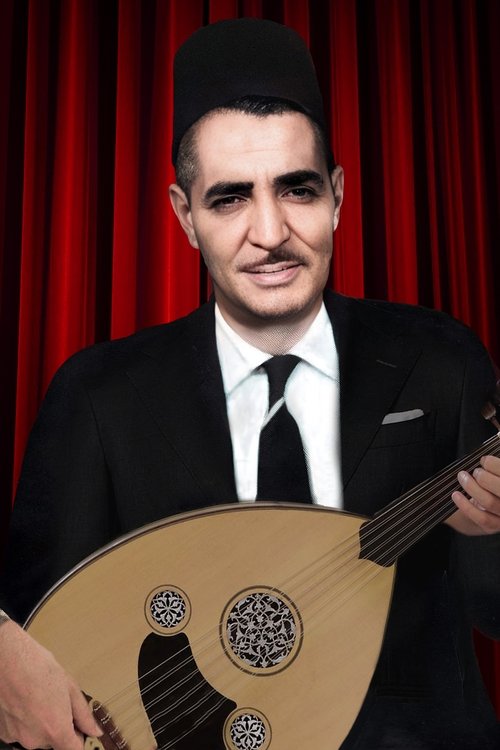
El Hadj M'hamed El Anka
Personal Info
Sound
0.6488
Male
20-May-1907
(119 years old)
Alger, Algeria
- Mohamed Idir Aït Ouarab
- ⵎⵓⵃⴰⵏⴷ ⵢⵉⴷⵉⵔ ⴰⵜ ⵓⴰⵔⴰⴱ
- الحاج محمد العنقة
El Hadj M'hamed El Anka
Biography
El Hadj M'hamed El Anka in Arabic (الحاج محمد العنقة), real name Mohamed Idir Aït Ouarab (in Kabyle: Muḥend Yidir At Waɛrab, in Tifinagh: ⵎⵓⵃⴰⵏⴷ ⵢⵉⴷⵉⵔ ⴰⵜ ⵓⴰⵔⴰⴱ), born in the Casbah of Algiers on the 20 May 1907 in a family from Azeffoun in Greater Kabylia, is a precursor and master of Algerian chaâbi song, died on November 23, 1978. He is the father of Mustapha El Anka, Sid Ali Halo and Abdel Hadi Halo. Hadj El Anka, grew up in a house at 4 rue de Timbouctou, in Casbah of Algiers. Hadj El Anka, also nicknamed “the phoenix”, grew up in a modest family. His father, Mohamed Ben Hadj Saîd, suffering on the day of his birth, had to be replaced by a maternal relative for the declaration to the civil registry, thus a misunderstanding arose regarding the patronymic name of El Anka. He attended three schools successively from 1912 to 1918: a Koranic school at Chikh si Mohand Arezki in Bir Djebbah (1912-1914), the school of Brahim Fatah (Casbah) from 1914 to 1917, and finally the normal school of Bouzareah until 'in 1919. On the recommendation of Si Saïd Larbi, a renowned musician, playing in Mustapha Nador's orchestra in Algiers, young M'hamed obtained the privilege of attending the festivals hosted by this master whom he revered. During the month of Ramadan in 1917, the sheikh noticed the young M'hamed and his sense of rhythm, allowing him to hold the tar (drum) within his orchestra. Later, Kéhioudji (Ayad Mohamed), a half-brother of Hadj M'rizek, welcomed him as a full-time musician in the orchestra which hosted the henna ceremonies generally reserved for beginner artists. After the death of Sheikh El Nadhor (real name Saidji) in 1925 in Cherchell, his wife's hometown where he had just settled, Hadj El Anka participated in singing lessons given by Sheikh Reghai Abderrahmane ( Abderrahmane Saidi), teaching which he followed assiduously from 1927 to 1932. At the beginning of the 1930s, El Anka saw its popularity favored by the modern means of the phonograph and the radio. It was at this time that he introduced several instruments into the Medh orchestras: the banjo, the Derbouka, the piano... and above all he asked the luthier Jean Bellido to redesign his half-mandolin by lengthening the handle while enlarging the soundboard, leading to the typically Algerian mandola that we know today. In 1932, the Sultan of Morocco, Mohammed V, invited him on the occasion of the Feast of the Throne. Upon his return from Mecca in 1937, he resumed his tours in Algeria and France and renewed his training, with Mustapha Skandrani as his conductor. El Hadj El Lanka has performed nearly 360 poems (qassaid) and produced around 130 records. After more than fifty years of career, El Anka will host the last two evenings of his career until dawn, in 1976, in Cherchell, for the wedding of the grandson of his master Sheikh Mustapha Nador and, in 1977, in El-Biar, with families who were very attached to him. He died on November 23, 1978, in Algiers, and is buried in the El-Kettar cemetery in Algiers.
Credits
|
||
|
||
|


