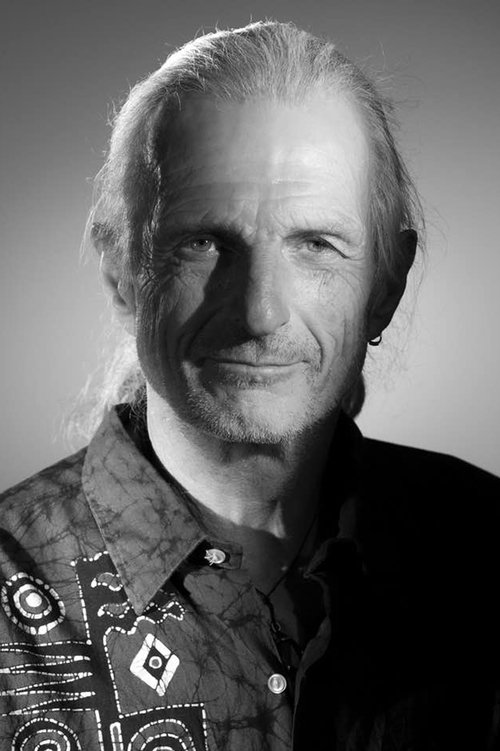
Bernard Gorgeon

Personal Info

Known For

Acting

Known Credits

0.1818

Gender

Male

Birthday

01-Jan-1953

Age

(73 years old)

Place of Birth

Marseille, France

Also Known As
  • NO INFO PROVIDED

Bernard Gorgeon

Biography

Bernard Gorgeon, born in 1953 in Marseille, is a French climber, mountain guide, and author. He is one of the leading figures in French climbing, whose biography is intrinsically intertwined with the history and culture of climbing in the South of France. Introduced to climbing at just ten years old in the calanques of Marseille, it was there that he forged his first memories as a climber, accompanied by his father, a passionate self-taught climber, passionate about mountaineering and the classics of Rébuffat. His childhood was divided between school, rocks, and precious moments spent exploring the region's cliffs, his fingers using hemp ropes, symbols of an era marked by freedom and resourcefulness. In the 1970s, Gorgeon was part of a nonconformist youth movement that revolutionized climbing, seeking to break away from traditional practices and invent a new way of life. Along with Patrick Edlinger and other companions, he contributed to the emergence and democratization of free climbing, which became a true philosophy and way of life. He was one of the pioneers of fixed equipment, of the club that invested in opening and securing routes, and of the mountain guide who didn't limit his practice to mountaineering. Bernard Gorgeon is primarily recognized for having "invented" the first routes in Buoux, an emblematic site in the Luberon, which he describes as a magical valley where the rock is "round, soft, perforated like St. John's wort, gray, yellow, red, green, fresh, secret, captivating, reassuring, cozy... a cocoon, a treasure chest." The Buoux site quickly became a stepping stone to the climber's holy grail: the Verdon, whose Grand Canyon remained largely unexplored at the time. Gorgeon opened several legendary routes there, many of which would become classics and shape his legend. He contributed to the writing of major guidebooks such as "Climbing the Verdon, the 500 Most Beautiful Routes" and "Climbing the Verdon, 984 Routes from 5b to 8c," listing the routes that have made this site's international reputation. Among the most notable are legendary routes in Buoux and the Verdon, often opened in epic conditions, combining daring, humor, and camaraderie. He was also a pioneer in the practice of canyoning in the Verdon Gorges. His book "A Life of Climbing, from Hemp to the Olympics" (Glénat, 2021) retraces his journey with humor, sensitivity, and a spirit of adventure, evoking his numerous route openings in the calanques, in Buoux, on the Sainte-Victoire mountain, but especially in the Verdon Gorges, where he settled in La Palud-sur-Verdon as a guide, in the heart of this temple of verticality. His story is also the story of his accidents, his friendships, the values ​​of the practice, and the transmission of the art of climbing. Through his atypical journey, he embodies the spirit of the rope team, the beauty of the rock, and the art of living specific to climbers from the South—between frugality, nonconformity, and freedom.


Credits

Overdon Overdon (1980) Character: Self
First film in a series of three with Over-Ice and Oversand and one of the first films on free climbing shot in the cliffs of the Gorges du Verdon in several parishes. We meet a certain Patrick Edlinger, Patrick Bérhault, but also Jean-Marc Troussier, Jacques Perrier, Stéphane Troussier, Hugues Jaillet, Gilbert Thomann, Odette Schoënleb, Bernard Gorgeon, Christian Guyomar. Thanks to the program Les Carnets de l'aventure, then broadcast on Antenne 2, and its producer Pierre-François Degeorges, this film was made. The chain gave its production agreement during the day, while the climbing was very confidential, no one knew Patrick Edlinger and the project itself contained only a few lines on a sheet
Verdon - The Show Must Go On Verdon - The Show Must Go On (2021) Character: Self
Documentary on climbing in the famous Verdon gorges, a mecca for world climbing. From Bernard Vaucher to Catherine Destivelle, from Bernard Gorgeon to Lionel Catsoyannis via Enzo Oddo and Fabien Ristori, relive the evolution of climbing in Verdon through testimonies and anecdotes from climbers from different generations. History, anecdotes and emotions from the early 60s to the present day, with an eye towards the future. Can we define ourselves as a climber without having visited the Verdon?
La Porte Des Cieux La Porte Des Cieux (1980) Character: Self
A legendary film in the history of rock climbing in the Verdon Gorges, shot in 16mm between the autumn of 1978 and the spring of 1979 by Henri Agresti, a high mountain guide. For the first time, acrobatic shots were taken on the walls of the Verdon. We rediscover a whole generation of pioneers on routes like Dingomaniaque, Triomphe d'Eros, Péril rouge, Luna Bong, Pichenibule or Necronomicon, routes which, like Dingomanique or Triomphe d'Eros, had just been opened. We witnessed a major turning point in the style and possibilities of rock climbing at the end of the 1970s: anchors sealed by drilling used as belaying and no longer as aids, new equipment: climbing shoes and chalk, harnesses and figure eights. Henri Agresti's unfinished and silent film, lasting around fifty minutes, was presented in the form of a nine-minute fragment at the Trento Film Festival in 1981.
Verdon-Saussois 1983 Verdon-Saussois 1983 (1983) Character: Self
In 1983, the French Mountain Federation (FFM) organized a landmark climbing gathering in Saussois and the Verdon, bringing together generations of the greatest climbers of the time, including Patrick Edlinger, Jean-Claude Droyer, Jerry Moffatt, Jean-Claude Droyer, Robert Paragot, Lucien Bérardini, Ron Fawcett, Jean-Pierre Bouvier, and other major figures. This event symbolized the emergence of modern sport climbing as a practice in its own right in France, with the liberation of legendary routes and the rise of freestyle climbing, notably under the leadership of Droyer and Edlinger. This gathering was a key moment in the dissemination of the freestyle ethic and the evolution of grading, while Saussois and the Verdon were at the forefront of high difficulty in the world.
Oversand Oversand (1981) Character: Self
Oversand is one of the first films about free climbing, the third film in a series of three with "Overdon" and "Over-Ice". Directed by Jean-Paul Janssen, the film was shot in 35mm in Algeria, in the Sahara Desert, in the Tamanrasset region, on the walls of the majestic peaks of the Atakor massif, central sub-region of Hoggar, mountainous heart of Hoggar, a volcanic plateau of almost circular shape, whose average altitude is 2000 meters, and which culminates at Mount Tahat (2918m), the highest point in Algeria. The Atakor is distinguished by its spectacular volcanic peaks, its needles, and its rugged landscapes, resulting from the erosion of ancient volcanic chimneys, which make it the most emblematic summits of the Hoggar, such as the Assekrem, the Ilamane, or the Tizouyag, where climbers Patrick Edlinger, Patrick Bérhault, Bernard Gorgeon, Hugues Jaillet, Jacques Perrier, Stéphane Troussier and Odette Schoënleb evolve under the watchful eye of the Tuareg caravans.


Our Work is

Designed, crafted, and built with ❤️ for fans of all kinds.


Anime | Movie
2024 Animeperson . All Rights Reserved