Nino Ferrer

Personal Info

Known For

Acting

Known Credits

0.3319

Gender

Male

Birthday

15-Aug-1934

Age

(92 years old)

Place of Birth

Genoa, Liguria, Italy

Also Known As
  • Agostino Arturo Maria Ferrari

Nino Ferrer

Biography

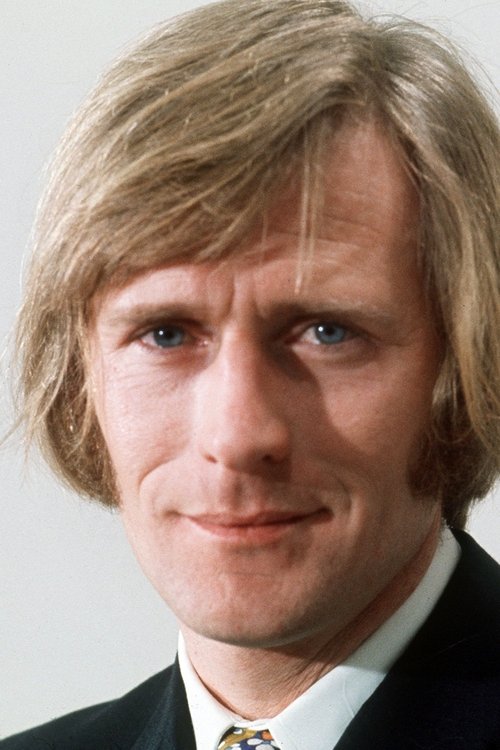
Nino Agostino Arturo Maria Ferrari (15 August 1934 – 13 August 1998), known as Nino Ferrer, was an Italian-born French singer-songwriter and author. Nino Ferrer was born on 15 August 1934 in Genoa, Italy, but lived the first years of his life in New Caledonia (an overseas territory of France in the southwest Pacific Ocean), where his father, an engineer, was working. Jesuit religious schooling, first in Genoa and later in Saint-Jean de Passy, Paris, left him with a lifelong aversion to the Church. From 1947, the young Nino studied ethnology and archaeology in the Sorbonne university in Paris, also pursuing his interests in music and painting. After completing his studies, Ferrer started traveling the world, working on a freighter ship. When he returned to France he immersed himself in music. A passion for jazz and the blues led him to worship the music of James Brown, Otis Redding and Ray Charles. He started to play the double bass in Bill Coleman's New Orleans Jazz Orchestra. He appeared on a recording for the first time in 1959, playing bass on two 45 singles by the Dixie Cats. The suggestion to take up solo singing came from the rhythm 'n' blues singer Nancy Holloway, whom he also accompanied. In 1963, Ferrer recorded his own first record, the single "Pour oublier qu'on s'est aimé" ("To forget we were in love"). The B-side of that single had a song "C'est irréparable", which was translated for Italian superstar Mina as "Un anno d'amore" and became a big hit in 1965. Later again, in 1991, Spanish singer Luz Casal had a hit with "Un año de amor", translated from Italian by director Pedro Almodóvar for his film Tacones Lejanos (High Heels). His first solo success came in 1965 with the song "Mirza". Other hits, such as "Cornichons" and "Oh! hé! hein! bon!" followed, establishing Ferrer as something of a comedic singer. The stereotyping and his eventual huge success made him feel "trapped", and unable to escape from the constant demands of huge audiences to hear the hits he himself despised. He started leading a life of "wine, women and song" while giving endless provocative performances in theatres, on television and on tour. In Italy, he scored a major hit in 1967 with "La pelle nera" (the French version is "Je voudrais être un noir" ["I'd like to be a black man"]). This soul song, with its quasi-revolutionary lyrics imploring a series of Ferrer's black music idols to gift him their black skin for the benefit of music-making, achieved long-lasting iconic status in Italy. "La pelle nera" was followed by a string of other semi-serious Italian songs, which included two appearances at the Sanremo Music Festival (in 1968 and 1970). In 1970, he returned to France and resumed his musical career there. Ferrer rebelled against the "gaudy frivolity" of French show business, filled with what he perceived as its "cynical technocrats and greedy exploiters of talent" (he had considered leaving show business altogether in 1967, when he left France for Italy). In his lesser-known songs, which the public largely ignored, he mocked life's absurdities. He agreed with Serge Gainsbourg and Claude Nougaro that songs are a "minor art" and "just background noise". ... Source: Article "Nino Ferrer" from Wikipedia in English, licensed under CC-BY-SA.

Credits

Delphine Delphine (1969) Character: Luc, un amant de Delphine
Delphine is a country girl who travels to the big city in search of feminine emancipation and freedom. Attending wild parties and nightclubs, she meet a young rock star.
Un été sauvage Un été sauvage (1970) Character: Serge
In Juan-les-Pins, Serge drops off a hitchhiker, Sylvie, who joins "Théo's gang", a group of students and workers, all young, all broke, improvising their vacations from day to day. Among them, Serge meets Helle, a discreet young girl with whom he quickly falls in love, but whom he can only win over once he's sorted out his many problems with the wrong people.
On dirait Nino Ferrer On dirait Nino Ferrer (2004) Character: Self (archive footage)
Nino Ferrer has had several lives: hits that made him famous; a dark but artistically fruitful period; a hidden life -of his own making- breaking away from showbiz. All these facets are concentrated in a brilliant, complex, skinned character. "It looks like Nino Ferrer" is a film rich in international archives (TSR, RTSI, Rai...), rare documents (Super 8 films of the Ferrer family) and even unpublished films (Nino Ferrer as an actor in an advertisement for Italian cheese). The film is also punctuated by the memories of famous musicians such as Manu Dibango as well as by the singer's successes and his live performances (L'Olympia, L'Arche de Noé).
Laissez tirer les tireurs Laissez tirer les tireurs (1964) Character: Andersen
A top-secret prototype is stolen from an American base. The man who stole it, Andersen, is murdered. The investigation is led by Jeff Gordon, who discovers in Andersen's papers a photo of a woman identified as Corinne Martin. Jeff Gordon escapes an assassination attempt on his way out of Martin's house and meets Corinne again, who denies any involvement in the robbery. Her husband, in the pay of foreign spies, is in possession of the "repeller". After several scuffles, Jeff Gordon arrests Martin and his accomplices. The prototype is returned to its base.
Litan Litan (1982) Character: Le docteur Steve Julien
Married couple Jock & Nora are visiting the town of Litan during Litan's Day, with its carnivalesque atmosphere. When Nora wakes that morning from dreaming the bizarre death of her husband, she sets out across town to find him and warn him. But as she does, she encounters stranger and stranger people and events erupting into a frenzy in front of her. Now, she and Jock must elude all of the impediments in their way of reaching safety on the outskirts of town.
Sheila, toutes ces vies-là Sheila, toutes ces vies-là (2022) Character: Self (archive footage)
The portrait of a woman who remembers. Sheila tells the story of Sheila, without concessions or evasions. Her childhood, her parents, her beginnings, the rumors, her love affairs, her marriage, her son, her successes, her farewells, her return, her mourning. The journey of an extraordinary popular icon who never stopped fighting. The courage of an artist who never gives up. "Sheila, toutes ces vies-là" is also a journey through time. 60 years of pop music, punctuated by numerous archives, personal films, timeless hits and illustrations by Marc-Antoine Coulon. But also 60 years of fashion, through a legendary wardrobe (her TV show outfits) that Sheila invites us to rediscover.
La Société du spectacle La Société du spectacle (1974) Character: Self (archive footage)
Guy Debord's analysis of a consumer society.


Our Work is

Designed, crafted, and built with ❤️ for fans of all kinds.


Anime | Movie
2024 Animeperson . All Rights Reserved
