|
La Maison dans la dune (1952)
Character: N/A
A tough customs man, out to get a youth smuggling tobacco into France across the Belgium border, falls for the jaded ex bar hostess the smuggler lives with.Meanwhile the young man is intrigued by another, more innocent girl.
|
|

|
La Femme nue (1949)
Character: N/A
Having become famous, a painter marries his model whom he soon brings to despair by deceiving her.
|
|

|
Les Amants du pont Saint-Jean (1947)
Character: (uncredited)
On the banks of the Rhône, not far from Tain l'Hermitage, Alcide Garonne, an old ferryman - and incidentally a poacher - lives out of wedlock with Victorine Rousset nicknamed Maryse, a colorful tramp. When Garrone's son, Pilou, a worker, falls in love with Augusta, the mayor's daughter, the unconventional old couple tries to protect the unconventional young pair from the disapproval of self righteous villagers.
|
|

|
La Belle que voilà (1950)
Character: The electric meter reader
Melodrama of two struggling artists whose love for each other is thwarted.She has some success as a ballerina despite being wounded by him in a fit of jealousy. His career as a sculptor is stymied when he is arrested.
|
|

|
Les Hommes en blanc (1955)
Character: Le balayeur
Jean Nerac completes his medical studies, sure of a successful career, but less sure of his attempts with fellow student Marianne, who refuses to accept him. Nerac leaves for the Auvergne. An old doctor will soon die, but replacing him will be difficult, as one of Jean's colleagues has failed. However, with patience, skill, modesty and friendship, Jean Nerac overcame the mistrust of his patients. He settled in these austere mountains, and Marianne, convinced of the young man's worth, helped him with her presence.
|
|

|
La passante (1951)
Character: The accountant
A woman who has a terrible secret to conceal takes refuge on a barge.
|
|

|
La Grande Maguet (1947)
Character: N/A
The orphan Catherine Maguet, nicknamed "La grande Maguet", was taken in by a young and good chatelaine, Suzanne de Norvaisis. Edmond, the husband of the latter, during a trip abroad, falls madly in love with another and will go, to conquer this one, to poison his wife. Imprisoned then released, the lord will finally marry the one for whom he has become a criminal. But the great Maguet will avenge her beloved murdered benefactress...
|
|

|
Pas de coup dur pour Johnny (1955)
Character: N/A
Robert Lanier, a man with a doubtful past, disembarks clandestinely in Le Havre decided to rebuild his life. Johnny, an orphaned young acrobat, takes him for his father and presents him to the seductive Gaby, his best friend.
|
|

|
L'aventure commence demain (1948)
Character: le réceptionniste de l'hôtel
Together with her partner-in-crime Claude, Clarence sets her sites on famed explorer Maxime. It seems that Luguet has stumbled upon the fabled "elephant's graveyard" in the jungles of Africa, and Miranda intends to get her well-manicured mitts on all that valuable ivory.
|
|

|
Le Plus Heureux des hommes (1952)
Character: A guest at the opening
An industrialist who prefers painting to business is cheated on by his wife with a painter who prefers business to painting.
|
|

|
Une vie de garçon (1953)
Character: N/A
Determined to marry, but without enthusiasm, Bernard chose Lysiane Laborie. To bid a fitting farewell to his wild youth, he buried his bachelorhood. Then his friend Bobby, with Lysiane's consent, persuades Bernard that he's marrying not a candid young girl, but Lily the Strychnine, a volcanic creature. The future husband discovers the joke and responds by introducing himself as a notorious gangster. Confrontations with thugs lead them all to the station. Bernard and Lysiane fall into each other's arms.
|
|

|
L'Invité du mardi (1950)
Character: Lulu, l'employé SNCF
When Charles learns that his wife and her lover want to poison him, he thinks of killing both of them.
|
|

|
Jeunes mariés (1953)
Character: (uncredited)
Jacques and Gisèle, who are just married, are starting their honeymoon. But at nightfall, on their way to marital bliss, their car chooses to break down and the lovebirds find themselves stranded in the village of Montigny. And instead of bathing in ecstasy as expected, Jacques and Gisèle become unwillingly entangled in the conflict that tears the villagers apart : should they continue to tolerate the presence of an American Army unit on municipal territory ?
|
|

|
French Cancan (1955)
Character: Le groom (uncredited)
Nineteenth-century Paris comes vibrantly alive in Jean Renoir’s exhilarating tale of the opening of the world-renowned Moulin Rouge. Jean Gabin plays the wily impresario Danglard, who makes the cancan all the rage while juggling the love of two beautiful women—an Egyptian belly-dancer and a naive working girl turned cancan star.
|
|

|
Juliette ou La Clef des songes (1951)
Character: Village man (uncredited)
Michel has stolen from his employer, Mr Bellanger, for the love of Juliette. He is now in jail. One night, while sleeping in his cell, he wakes up all of a sudden, the gates open and he finds himself in a strange village where all the inhabitants have lost their memory. There, meets Juliette again who seems to agree to marry a powerful man, who might well be Bluebeard...
|
|

|
Le Monocle noir (1961)
Character: Un inspecteur
The Marquis de Villemaur reunite strange visitors in his Castle, to meet a survivor of the Third Reich. There is an Italian fascist, Heinrich; a German, Matthias; a Russian; and Dromard, a blind French war hero with a black monocle.
|
|

|
Thérèse Raquin (1953)
Character: N/A
Star-crossed lovers Thérèse and Laurent think they've gotten away with murder after Thérèse's weakling husband "falls" from a speeding train. But when forced to contend with a blackmailer's demands and the mute accusations of Thérèse's mother-in-law, it's only a matter of time before the law, their passion or blind chance trips them up.
|
|

|
Papa, maman, ma femme et moi... (1955)
Character: (uncredited)
Robert Langlois is now married to Catherine, the former housemaid. And they would live happily ever after if the housing crisis did not force them to live together with Gabrielle and Fernand, Robert's parents. For, despite the good will on either side, tension soon arises. What else to expect when there is too little space in their Montmartre apartment for four people (then for six then eight, the couple having... two pairs of twins!) ; the continued presence there of Fernand (who loves peace and quiet) after he is driven to retirement ; the difficult beginnings of Robert as a lawyer in a room of the apartment, etc... Other troubles follow and the harried family is on the verge of implosion...
|
|

|
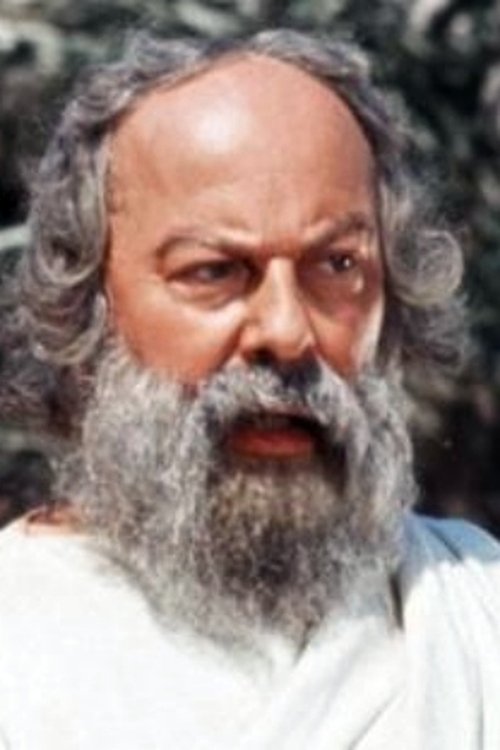
Socrate (1971)
Character: Socrate
A false accusation leads the philosopher Socrates to trial and condemnation in 4th century BC Athens.
|
|

|
Le Septième Juré (1962)
Character: Philibert, employé de pharmacie
In a moment of madness a middle-aged, married and respectable pharmacist kills a young woman who is sun-bathing by a lake. Unable to take in what he has done, he flees from the scene of the crime and behaves as if nothing has happened. Eventually her boyfriend is charged with the crime and, in a strange twist of fate, the killer finds himself serving on the jury.
|
|

|
Agence Matrimoniale (1952)
Character: Mr. Paul
Noël is a bachelor who inherits a matrimonial agency. After contemplating selling it, he chooses to manage it.
|
|
|
|

|
Souvenirs perdus (1950)
Character: (uncredited)
Suppose lost and found objects could talk... But they can! At least four of them... : -A statuette of Osiris remembers how two ex-lovers, a model and a good for nothing who claimed to be an Egyptologist, met again one Christmas Eve. -A violin has things to say about Raoul, a humble policeman who lost Solange, a widowed grocer he loved, to a god-dam seducing busker also named Raoul. -A scarf was witness to an eerie romance between a young madman and girl he had saved from suicide. -A funeral wreath lets us know how it caused a young woman to believe her lover dead. After having told their respective story, the objects return to their customary stillness.
|
|

|
Crime et châtiment (1956)
Character: N/A
Former student Raskolnikov is pushed to murder when struggling to pay the rent on his apartment. When the murder is being investigated by the police, Raskolnikov struggles between trying to hide his guilt and the pressure to confess.
|
|

|
Suivez cet homme (1953)
Character: Inspector Martin (uncredited)
While celebrating his birthday, police inspector Basquier recalls two of his most celebrated cases. The first involves duplicitous moneylender Olga. The second concerns the brutal broad daylight murder of innocent young Yvonne.
|
|

|
Les Anciens de Saint-Loup (1950)
Character: Abadie
Due to financial problems, the boarding-school of Saint-Loup is on the verge of closing its doors. In desperation, Jacquelin, the headmaster, has the idea to invite former students to a fund-raising reunion. Among the alumni, three men whose common point is to have been in love at the time with the headmaster's niece. One is a banker, the second a priest and the last one a globetrotter. All of a sudden, the peace of the assembly is disturbed: Jacquelin's niece has just been murdered.
|
|

|
Le Café du Cadran (1947)
Character: N/A
Julien Couturier and his wife Louise, a young couple from Auvergne who have come to Paris to try their luck for the first time in their lives, become the owners of the "Café du Cadran" ("Clockface Cafe"). On opening day, they meet the people who will become their clientele. It's a busy place, with regular customers served by two waiters, Jules and Victor. While Julien is comfortable in his role as boss, Louise doesn't quite get used to this urban world, where everything moves faster, especially human feelings. She often misses Marcenait, the village in Auvergne where she and her husband ran the "Café du Commerce". Mr. Luigi, a café customer and violinist who performs at the "Café de Paris", has undertaken Louise's cultural education. He teaches her how to dress and do her hair, while recounting his musical successes and travels, skilfully playing on his undeniable seductiveness...
|
|

|
Les Misérables (1958)
Character: (uncredited)
In 19th century France, Jean Valjean, a man imprisoned for stealing bread, must flee a relentless policeman named Javert. The pursuit consumes both men's lives, and soon Valjean finds himself in the midst of the student revolutions in France.
|
|

|
OK patron (1974)
Character: N/A
Mario, the head of the Mafia in France, has just been mortally wounded. His "companion" decides to find him a successor, before the New York "organization" appoints one. She instructs her two bodyguards to take on anyone who likes money, doesn't have any and, above all, doesn't want to work too hard - in short, "the average Frenchman"... They discover Léon Bonnet, a representative of "magic crosses". They send him gifts: champagne, weapons (a mistake...), a ring for his fiancée, and a meal worthy of the finest gourmets. In return, they take him to Mario's dying bedside, and have him sign over the estate. It's then that Leon, with his angelic good looks, restores order within the Mafia, surprising all his adversaries with his manners, and outwitting the police...
|
|

|
Razzia sur la Chnouf (1955)
Character: Emile Lourmel
Henri, the Man from Nantes, comes back to his country after a successful stay in the United States, where he was working for Liski, the drug dealer. With the fame of being a tough guy preceding him, he sets himself to the task of knowing why the French operations were not so profitable - and soon he is master of all links of the organization. He can now get it honed to perfection - or destroy it. Only... the Police are following his every step.
|
|

|
Entre onze heures et minuit (1949)
Character: Tramp (uncredited)
Between eleven o’clock and midnight one evening, a notorious trafficker Jérôme Vidauban is shot whilst walking in a tunnel in Paris. The case is assigned to Inspector Carrel, who is Vidauban’s perfect double. Using his resemblance to the arch criminal, Carrel manages to infiltrate in Vidauban’s circle of acquaintances and contacts. He becomes embroiled in a bizarre web of intrigue and discovers no shortage of possible murder suspects, all of whom appear to be surprised to see him still alive.
|
|

|
Le Dindon (1951)
Character: le clerc
Paris at the Belle Epoque. Monsieur de Pontagnac, a perfect honest man, loves pretty women too much and that plays him many tricks. What need does he have to follow the pretty Lucienne Vatelin, home, to find himself in the presence of the husband, the notary Vatelin, who is part of his circle? From there, many characters will meet, avoid each other, find each other. Adultery, domestic scenes and reconciliation will be their lot.
|
|

|
Non coupable (1947)
Character: Friend of Doctor Ancelin (uncredited)
An alcoholic doctor accidentally kills someone and manages to make the death look like an accident. The episode triggers a sense of confidence and he resolves to correct the miseries of his life.
|
|

|
Monseigneur (1949)
Character: Un client de la serrurerie (non crédité)
Louis Mennechain is a modest locksmith. So imagine his amazement when Professor Piétrefond approaches him and tells him he recognizes in him a descendant of the kings of France, more precisely of Louis XVII (the king who never reigned). According to him he is none other than the monarch's great grandson. Louis's life is soon turned upside down as he becomes the center of attention of a group of ardent royalists. Even a duchess "gives" him her love to make sure that he accepts his role as pretender to the throne...
|
|

|
Retour à la vie (1949)
Character: Inspector (segment "Le retour de Jean") (uncredited)
In France in 1946, the difficult return to civilian life of five deportees and prisoners of war after having lived through the hell of the Second World War.
|
|

|
Arrêtez les tambours (1961)
Character: le blessé mécontent
In 1944, in a small village in Calvados, just as the Allies landed, a British plane was shot down. The wounded pilot seeks help. All the villagers, who speak only of resistance, refuse to help, for fear of reprisals. Only the mayor, Dr. Leproux, takes him in and nurses him back to health, then entrusts him to the Resistance. But the Germans get wind of the story and arrest Leproux. He is saved by Major Frantz. But the budding friendship between these two men "doesn't stop the drums", and the war is on.
|
|

|
Paris au mois d'août (1966)
Character: Samaritaine customer
A man is alone in Paris during the month of August while his woman and children go on vacation. He meets a young English girl posing as a model who came to Paris for a shoot.
|
|

|
Sans laisser d'adresse (1951)
Character: M. Lainé, un futur père
A woman in Paris hires a taxi driver to locate her ex-lover, father to her newborn child, who left her without leaving an address.
|
|

|
Le pacha (1968)
Character: L'officier de police Marquet
Six months before his retirement from the criminal police, inspector Joss finds his colleague Gouvion dead, in a poorly faked suicide attempt. Joss loses his temper, and investigates on his own, which leads him through the bas-fond of Paris...
|
|

|
Les Valseuses (1974)
Character: Man in the red Fiat
Two whimsical, aimless thugs harass and assault women, steal, murder, and alternately charm, fight, or sprint their way out of trouble. They take whatever the bourgeoisie holds dear, whether it’s cars, peace of mind, or daughters. Marie-Ange, a jaded, passive hairdresser, joins them as lover, cook, and mother confessor. She’s on her own search for seemingly unattainable sexual pleasure.
|
|

|
Quai des Orfèvres (1947)
Character: L'inspecteur au sapin de Noël (uncredited)
Paris, France, December 1946. Jenny Lamour, an ambitious cabaret singer, and Maurice, her extremely jealous pianist husband, become involved in the thorough investigation of the murder of a shady businessman, led by Antoine, a peculiar and methodical police inspector.
|
|

|
Dortoir des grandes (1953)
Character: N/A
In a little town with a renowned college a female student is found after she was hogtied and strangled to death. Inspector Marco is assigned to catch the murderer.
|
|