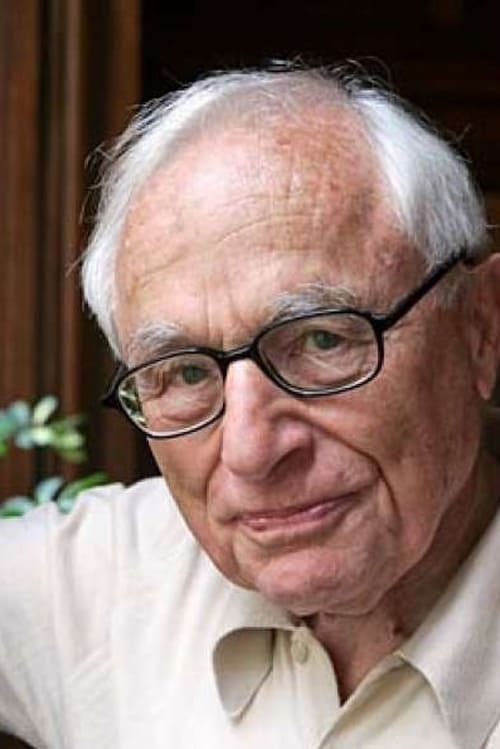
Walter Bernstein

Personal Info

Known For

Writing

Known Credits

0.5742

Gender

Male

Birthday

20-Aug-1919

Age

(107 years old)

Place of Birth

Brooklyn, New York, USA

Also Known As
  • NO INFO PROVIDED

Walter Bernstein

Biography

In February 1941, Bernstein was drafted into the U.S. Army. Eventually attaining the rank of Sergeant, he spent most of World War II as a correspondent on the staff of the Army newspaper Yank, filing dispatches from Iran, Palestine, Egypt, North Africa, Sicily and Yugoslavia. He wrote of his experiences in Palestine in an article entitled "War and Palestine". Bernstein wrote a number of articles and stories based on his experiences in the Army, many of which originally appeared in The New Yorker. These were collected in Keep Your Head Down, his first book, published in 1945. Bernstein first came to Hollywood in 1947, under a ten-week contract with writer-producer-director Robert Rossen at Columbia Pictures. Following that stint, he worked for a while for producer Harold Hecht, which resulted in his first screen credit, shared with Ben Maddow, for their adaptation of the Gerald Butler novel Kiss the Blood Off My Hands for the 1948 Universal film. He subsequently returned to New York, where he continued writing for The New Yorker and other magazines, and eventually found work as a scriptwriter in the early days of live television. In 1950, because of his numerous left-wing political affiliations and related activities, his name appeared in the notorious publication Red Channels, and as a result he found himself blacklisted. Throughout the 1950s, however, he managed to continue writing for television, both under pseudonyms and through the use of "fronts" (non-blacklisted individuals who would permit their names to appear on his work). In this manner, he contributed to several notable TV programs of the era, including Danger, the CBS News docudrama series You Are There and the mystery series Colonel March of Scotland Yard. (It has been incorrectly stated in some sources that Bernstein's blacklisting resulted from "unfriendly" testimony given to HUAC in 1951, but in fact he was not subpoenaed by the Committee until the late 1950s, and never actually testified.) His screenwriting career began to rebound from the blacklist when director Sidney Lumet hired him to write the screenplay for the 1959 Sophia Loren movie That Kind of Woman. From then on Bernstein was able to work openly on films such as Paris Blues (1961) and Fail-Safe (1964). He also contributed, without receiving credit, to the screenplays of The Magnificent Seven (1960) and The Train (1964), and was one of several writers who worked on the script for the ill-fated Something's Got to Give, which was left uncompleted at the time of the death of its star, Marilyn Monroe, in 1962.

Credits

Guns for Hire: The Making of 'The Magnificent Seven' Guns for Hire: The Making of 'The Magnificent Seven' (2000) Character: Self
A documentary about 'The Magnificent Seven'.
Tell Us She Was One of You: The Hollywood Blacklist and 'Johnny Guitar' Tell Us She Was One of You: The Hollywood Blacklist and 'Johnny Guitar' (2016) Character: Self
Larry Ceplair, co-author of The Inquisition in Hollywood, and blacklisted screenwriter Walter Bernstein, a former member of the Communist Party, discuss the socio-political environment in Hollywood during the 1940s and 1950s, as well as unusual production history of "Johnny Guitar."
Revisiting 'Fail-Safe' Revisiting 'Fail-Safe' (2000) Character: Self
Documentary featuring interviews with director Sidney Lumet, "Fail-Safe" (2000) producer George Clooney, star Dan O’Herlihy and screenwriter Walter Bernstein.
Imitation of Life: The Blacklist History of High Noon Imitation of Life: The Blacklist History of High Noon (2016) Character: N/A
Historian Larry Ceplair and blacklisted screenwriter Walter Bernstein discuss the production history of High Noon, Carl Foreman's blacklisting, and the McCarthy era.
Arthur Miller, Elia Kazan and the Blacklist: None Without Sin Arthur Miller, Elia Kazan and the Blacklist: None Without Sin (2003) Character: Self
Director Elia Kazan and playwright Arthur Miller were once best friends and professional colleagues, to most that knew them then in both capacities as soul mates. Their politics were similar which was reflected in their work. Kazan was a Communist Party member for a few years in the mid-1930's, but Miller never officially joined the party ranks. Their relationship changed in the early 1950's when Kazan was subpoenaed to testify in front of the House Un-American Activities Committee where he named names of Communist Party members past and present.
Annie Hall Annie Hall (1977) Character: Annie's Date Outside Theatre
New York comedian Alvy Singer falls in love with the ditsy Annie Hall.
On Cukor On Cukor (2000) Character: Self
Widely thought of as “a woman’s director,” legendary film director George Cukor is profiled with the use of film clips and interviews with his friends and colleagues to provide a picture of the director’s unique accomplishments and to trace the arc of his career.
Marilyn Monroe: The Final Days Marilyn Monroe: The Final Days (2001) Character: Self
Marilyn Monroe's final project, "Something's Got to Give", has become one of the most talked about unfinished films in history. The story of the film and Marilyn's last days were seemingly lost… until now. Through interviews, never-before-seen footage and an edited reconstruction of "Something's Got to Give", Marilyn Monroe: The Final Days provides a definitive and fascinating look at the last act in the life of the world's most famous and tragic superstar.
The Tramp and the Dictator The Tramp and the Dictator (2002) Character: Self (uncredited)
A look at the parallel lives of Charlie Chaplin and Adolf Hitler and how they crossed with the creation of the film “The Great Dictator,” released in 1940.
Trumbo Trumbo (2007) Character: Self - Interviewee
Through a focus on the life of Dalton Trumbo (1905-1976), this film examines the effects on individuals and families of a congressional pursuit of Hollywood Communists after World War II. Trumbo was one of several writers, directors, and actors who invoked the First Amendment in refusing to answer questions under oath. They were blacklisted and imprisoned. We follow Trumbo to prison, to exile in Mexico with his family, to poverty, to the public shunning of his children, to his writing under others' names, and to an eventual but incomplete vindication. Actors read his letters; his children and friends remember and comment. Archive photos, newsreels and interviews add texture. Written by
Hollywoodism: Jews, Movies and the American Dream Hollywoodism: Jews, Movies and the American Dream (1998) Character: Himself
This film discusses the effect on how major American films in Hollywood were influenced by the Eastern European Jewish culture that most of the major movie moguls who controlled the studios shared. Through clips of various films, the filmmakers illustrate the dominant themes like that of the outsider, the outspoken American patriotism, and rooting for the underdog in society.
Hollywood contra Franco Hollywood contra Franco (2009) Character: Self - Screenwriter
The Spanish Civil War (1936-1939) caused a great impression on the lives of most of the American artists of that era, so many movies were made in Hollywood about it. The final defeat of the Spanish Republic left an open wound in the hearts of those who sympathized with its cause. The eventful life of screenwriter Alvah Bessie (1904-1985), one of the Hollywood Ten, serves to analyze this sadness, the tragedy of Spain and its consequences.


Our Work is

Designed, crafted, and built with ❤️ for fans of all kinds.


Anime | Movie
2024 Animeperson . All Rights Reserved
