Gillo Pontecorvo

Personal Info

Known For

Directing

Known Credits

1.1086

Gender

Male

Birthday

19-Nov-1919

Age

(107 years old)

Place of Birth

Pisa, Italy

Also Known As
  • 질로 폰테코르보
  • جيلو بونتيكورفو

Gillo Pontecorvo

Biography

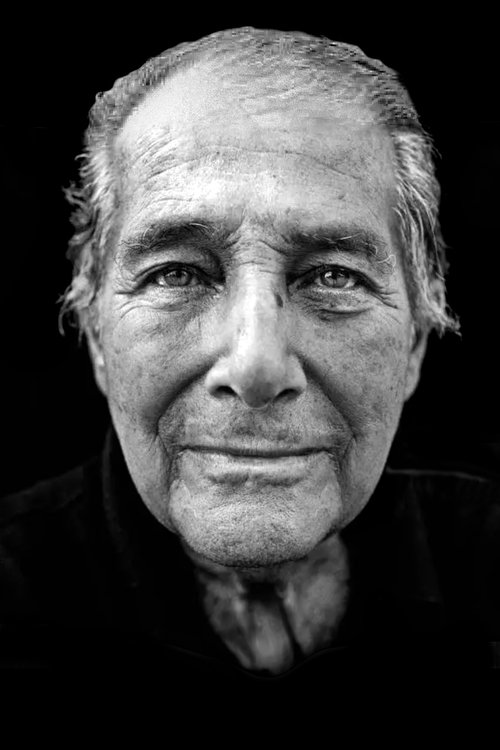
Gillo Pontecorvo, born November 19, 1919 in Pisa and died October 12, 2006 in Rome, is an Italian filmmaker. Of Italian Jewish origin, Gillou Pontecorvo is the brother of Bruno Pontecorvo, a nuclear physicist working for the USSR, and Guido Pontecorvo, an Italian-British geneticist, as well as the grandson of the Jewish industrialist Pellegrino Pontecorvo. He has three sons: Marco (cinematographer and director), Simone (painter) and Ludovico (physicist). A chemist by training, he quickly turned to journalism and became correspondent in Paris for several Italian publications. In 1941, he joined the Italian Communist Party (PCI), and participated in anti-fascist activities in northern Italy. After the Soviet repression of the Budapest uprising in 1956, he broke with the PCI, while continuing to claim Marxism. He started in cinema after the Second World War as assistant to Yves Allégret1 and Mario Monicelli in particular. From 1953, he produced his first documentary essays (Giovanna, MM, 1956). In 1956, he contributed to an episode of Die Windrose, supervised by Alberto Cavalcanti. The following year, he directed his first feature film, A Called Squarcio (La grande strada azzurra, produced by Maleno Malenotti, based on a novel by Franco Solinas). Then he describes the concentration camp world in the film Kapò (1960), the story of a Jewish woman who becomes an auxiliary of the Nazis. The film was nominated for an Oscar for best foreign language film in 1961. It gave rise to a famous controversy over the "Kapò tracking shot", which Jacques Rivette had deemed unworthy in an article in Cahiers du cinéma entitled "De l' abjection.” In 1966, he directed his most important film, The Battle of Algiers (La Battaglia di Algeri), a reconstruction of the police action of the French army during the Battle of Algiers which was a fundamental episode of the war. from Algeria. This film was awarded the Golden Lion at the Venice Festival, but remained banned in France for a long time and its exploitation caused a lot of uproar linked to the scenes of torture committed by the French army. In Queimada (1969), dominated by the interpretation of Marlon Brando, he once again attacks colonialism, with an evocation of the Haitian revolution at the beginning of the 19th century. Faced with the commercial failure of Queimada, Pontecorvo stopped making films. He still directed a secondary film, Operation Ogre (Ogro, 1979), on the assassination of Luis Carrero Blanco by ETA during Francoism, and collaborated on the film L'addio a Enrico Berlinguer (1984). In 1992, he was appointed director of the Venice Film Festival. In 1993, during the 50th edition of the Mostra, Pontecorvo presented Steven Spielberg with an honorary Golden Lion, at the time of the release of Schindler's List. He died on October 12, 2006, at the age of 86, in Rome, Italy.

Credits

Pontecorvo: The Dictatorship of Truth Pontecorvo: The Dictatorship of Truth (1992) Character: Self
Presented by the late literary critic Edward Said, this thirty-seven minute 1992 documentary reflects on director Gillo Pontecorvo's youth and politics in an attempt to understand his approach to filmmaking.
Ritorno ad Algeri Ritorno ad Algeri (1992) Character: Himself
Gillo Pontecorvo, who directed the insurrectionary classic The Battle of Algiers in 1966, returns to the city of Algiers to view the progress Algeria has made - for better or worse - since the departure of the French colonialist forces thirty years earlier.
Homo Cinematographicus Homo Cinematographicus (1998) Character: Self
Homo Cinematographicus is a human species whose unit of measurement and point of reference is the cinema and its derivative, television. Filmed at the 1998 Cannes Film Festival, the film offers an unspecified number of statements, talking about memories and a thousand fragments of stories, titles and film scenes, the warp of a gigantic collective Chanson de geste.
Il Sole sorge ancora Il Sole sorge ancora (1946) Character: Pietro
A neorealist tribute to the Italian resistance fighters of World War II.
La grande strada azzurra La grande strada azzurra (1957) Character: (uncredited)
Squarciò, a fisherman, lives with his family on a small island off the Dalmatian coast of Italy. Like his fellow villagers, Squarciò struggles against harsh living conditions, a scarcity of fish in nearby waters and exploitation by the local wholesaler. But while the other fishermen continue to use nets, he goes out to the open sea to fish illegally with bombs. But Squarciò borrows money, loses his boat, and in a moment of supreme desperation, has to bomb directly off-shore, causing the hatred and rejection of his fellow fishermen. Trying to save his family, Squarciò and his young sons sail their new boat out beyond the local waters and bomb-fish again. But this time, the sea exacts a terrible toll…
Marxist Poetry: The Making of The Battle of Algiers Marxist Poetry: The Making of The Battle of Algiers (2004) Character: Self
To commemorate the fiftieth anniversary of THE BATTLE OF ALGIERS, we revisited our edit of the film and interviews with director Gillo Pontecorvo and producer Saadi Yacef, who discuss the process of representing Algeria's struggle for independence and the challenges of presenting a balanced view of the conflict.
L'addio a Enrico Berlinguer L'addio a Enrico Berlinguer (1984) Character: Self
A film of Enrico Berlinguer's funeral in Rome, briefly tracing his career as leader of the Italian Communist Party.
Elio Petri... appunti su un autore Elio Petri... appunti su un autore (2005) Character: Self
A documentary on the director’s career, featuring interviews with friends, collaborators, and filmmakers.
Five Directors On The Battle of Algiers Five Directors On The Battle of Algiers (2004) Character: Self
This 17-minute documentary is featured on the 3-Disc Criterion Collection DVD of The Battle of Algiers (1966), released in 2004. An in-depth look at the Battle of Algiers through the eyes of five established and accomplished filmmakers; Spike Lee, Steven Soderbergh, Oliver Stone, Julian Schnabel and Mira Nair. They discuss how the shots, cinematography, set design, sound and editing directly influenced their own work and how the film's sequences look incredibly realistic, despite the claim that everything in the film was staged .
The Stupids The Stupids (1996) Character: Talk show guest
An incredibly dull-witted family unknowingly stumble upon an illegal weapons deal while on the trail of their "stolen" garbage.
La Bataille d'Alger, l'empreinte La Bataille d'Alger, l'empreinte (2018) Character: Self (archive footage)
Cheikh Djemaï looks back on the genesis of Gillo Pontecorvo’s feature film, The Battle of Algiers (1965). Through archive images, extracts from the film and interviews with personalities, the filmmaker retraces the journey of a major work - from the events of the Algiers Casbah (1956-1957) to the presentation of the Lion of 'Or causing the anger of the French delegation in Venice - which left its mark as much in the history of cinema as in that of Algeria.
Gillo: Le donne, i cavalier, l'armi, gli amori Gillo: Le donne, i cavalier, l'armi, gli amori (2007) Character: Self
Pontecorvo is one of those Italian filmmakers marked for life by neorealism. He declares that he decided to do cinema after leaving a screening of "Paisa" by Roberto Rossellini. The future filmmaker was then in Paris, a year after a war during which he became one of the main figures of the Italian resistance and one of the founders of the Youth Front. Leaving his status as a war hero behind him, Pontecorvo made his directorial debut with "Giovanna", a short film heralding a cinematic career dedicated to what he himself calls the "dictatorship of truth."


Our Work is

Designed, crafted, and built with ❤️ for fans of all kinds.


Anime | Movie
2024 Animeperson . All Rights Reserved
